
10 Foods for Bone Strength and Health
Your Plate Might Be Quietly Working Against Your Bones
You feel fine. You walk, you move, you go about your day without a second thought about your skeleton. But bone loss is silent. It doesn't announce itself with pain or warning signs until a fracture happens. By then, the damage has often been building for years. The good news? What you eat every day plays a bigger role in bone strength than most people realize, and small shifts now can make a real difference later.
Why Most People Don't Think About Bone Health Until It's Too Late
Bones feel permanent. They hold you up, they heal when broken, and they rarely demand attention. This false sense of security is exactly the problem.
Bone density peaks in your late twenties and slowly declines after that. For many people, especially women after menopause, that decline speeds up. Without enough calcium, vitamin D, and other key nutrients, bones become porous and fragile over time.
The tricky part is that standard diets don't always fill the gap. Busy schedules, processed foods, and skipped meals mean many people fall short on bone-supporting nutrients without ever realizing it.
The Core Nutrients Your Skeleton Actually Needs
Bone strength isn't just about calcium. It's a team effort between several nutrients working together:
- Calcium - the primary building block of bone tissue.
- Vitamin D - helps your body absorb calcium effectively.
- Vitamin K2 - directs calcium to your bones instead of your arteries.
- Magnesium - supports bone structure and helps activate vitamin D.
- Protein - forms the collagen matrix that gives bones flexibility and strength.
Missing even one of these can limit how well your body builds and maintains bone mass, regardless of how much calcium you consume.
10 Foods Commonly Recommended for Bone Strength
While individual needs vary, these foods are frequently highlighted by nutrition researchers for their bone-supporting properties:
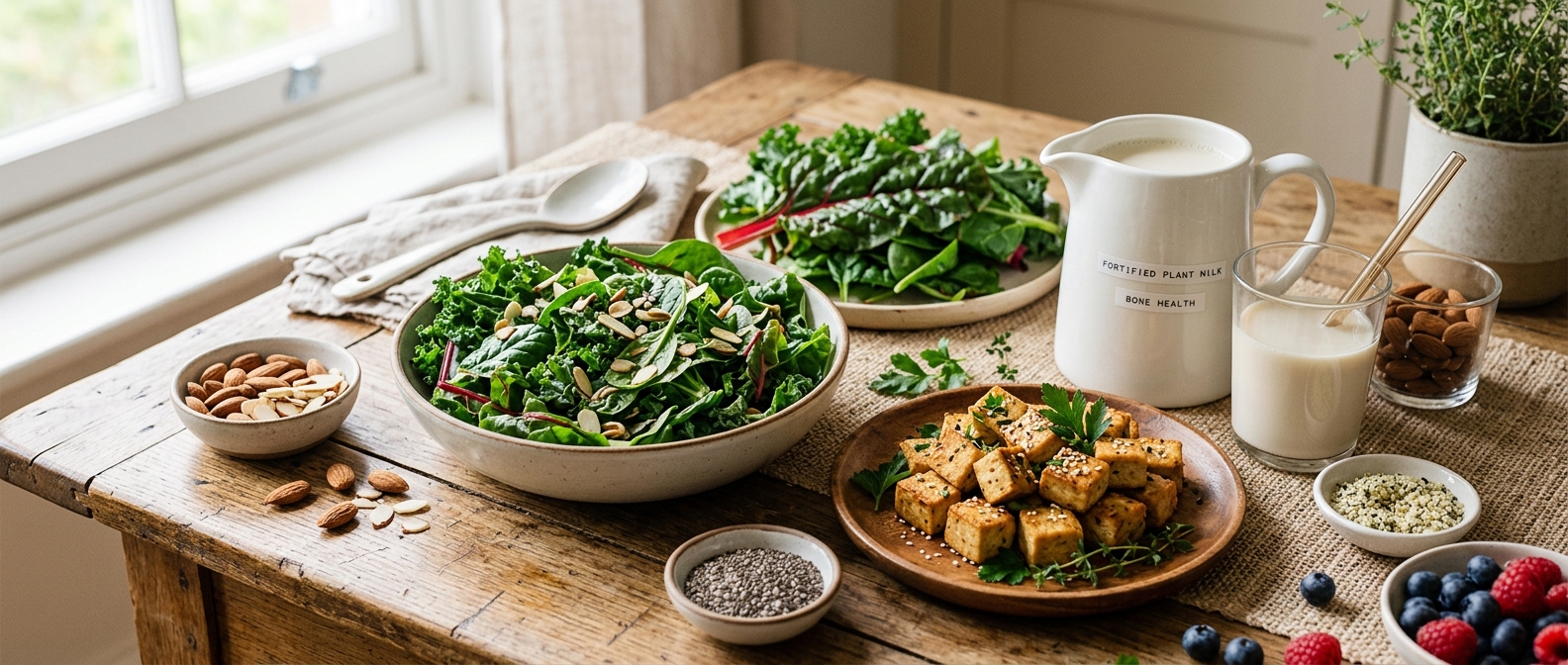
- Leafy greens like kale and bok choy - rich in calcium and vitamin K.
- Fortified plant milks - often enriched with calcium and vitamin D.
- Tofu and tempeh - plant-based protein with calcium, especially when set with calcium sulfate.
- Almonds - a good source of calcium and magnesium.
- Chia and sesame seeds - small but dense in calcium.
- Beans and lentils - provide protein and magnesium.
- Fortified cereals - frequently boosted with vitamin D.
- Dried figs - a lesser-known calcium source.
- Edamame - offers protein alongside calcium.
- Mushrooms exposed to UV light - a rare plant-based vitamin D source.
These foods are especially relevant for anyone exploring a vegan or plant-based approach to bone health, since common animal-based calcium sources are off the table.
Why a Vegan Diet Requires Extra Attention to Bone Nutrients
Plant-based eating has clear benefits, but bone health is one area that requires planning. Dairy is a major calcium source for many people, and removing it means other foods must fill that role deliberately.
Vitamin D is another challenge. It's naturally found in very few plant foods, which is why fortified products and sensible sun exposure often become part of the conversation for vegans.
This doesn't mean a vegan diet is inherently worse for bones. Research is mixed, and many plant-based eaters maintain strong bone density by being intentional about nutrient intake. The key word is intentional. It doesn't happen by accident.
Common Mistakes That Undermine Bone Health
Even well-meaning eaters can fall into patterns that work against bone density:
- Relying on a single food source for calcium instead of variety.
- Ignoring vitamin D because "it's a sunshine vitamin."
- Consuming excess sodium, which can increase calcium loss.
- Overlooking weight-bearing exercise, which works alongside diet to maintain bone density.
- Assuming supplements alone can replace a varied diet.
Small corrections in these areas often matter more than any single "superfood."
Why Generic Advice Only Goes So Far
Nutrition guidance is useful as a starting point, but bone health needs vary by age, sex, activity level, and whether someone follows a vegan, vegetarian, or omnivorous diet. A 30-year-old vegan athlete and a 65-year-old post-menopausal woman have very different nutrient targets and risk factors.
This is where general food lists stop being enough. The right combination of foods, supplements, and monitoring depends on personal health history, lab results, and sometimes guidance from a healthcare provider familiar with plant-based nutrition.
If you're trying to understand how a vegan or plant-based diet affects osteoporosis risk specifically, or what a complete bone-health nutrition plan looks like for your situation, it often helps to look into more detailed, personalized guides and current research comparing bone outcomes across different diet types.
Where to Go From Here
Bone health isn't built in a single meal or broken by one skipped nutrient. It's the sum of daily choices over years. Understanding which foods support bone density is a strong first step, especially for anyone following or considering a vegan lifestyle.
For a deeper look at how diet, supplementation, and lifestyle factors interact with bone density over time, further reading on osteoporosis prevention and plant-based nutrition can offer more specific, up-to-date insights tailored to different life stages and dietary patterns.