
Is Your Bathroom Floor a Hidden Danger?
Is Your Bathroom Floor a Hidden Danger?
Most people never think twice about their bathroom floor - until someone slips. The bathroom is one of the most hazardous rooms in any home, and the floor beneath your feet is often the biggest risk of all. Whether you're concerned about an elderly parent, a young child, or simply your own safety, understanding bathroom safety flooring could make a life-changing difference. The good news? Modern solutions are more stylish, affordable, and accessible than ever before.
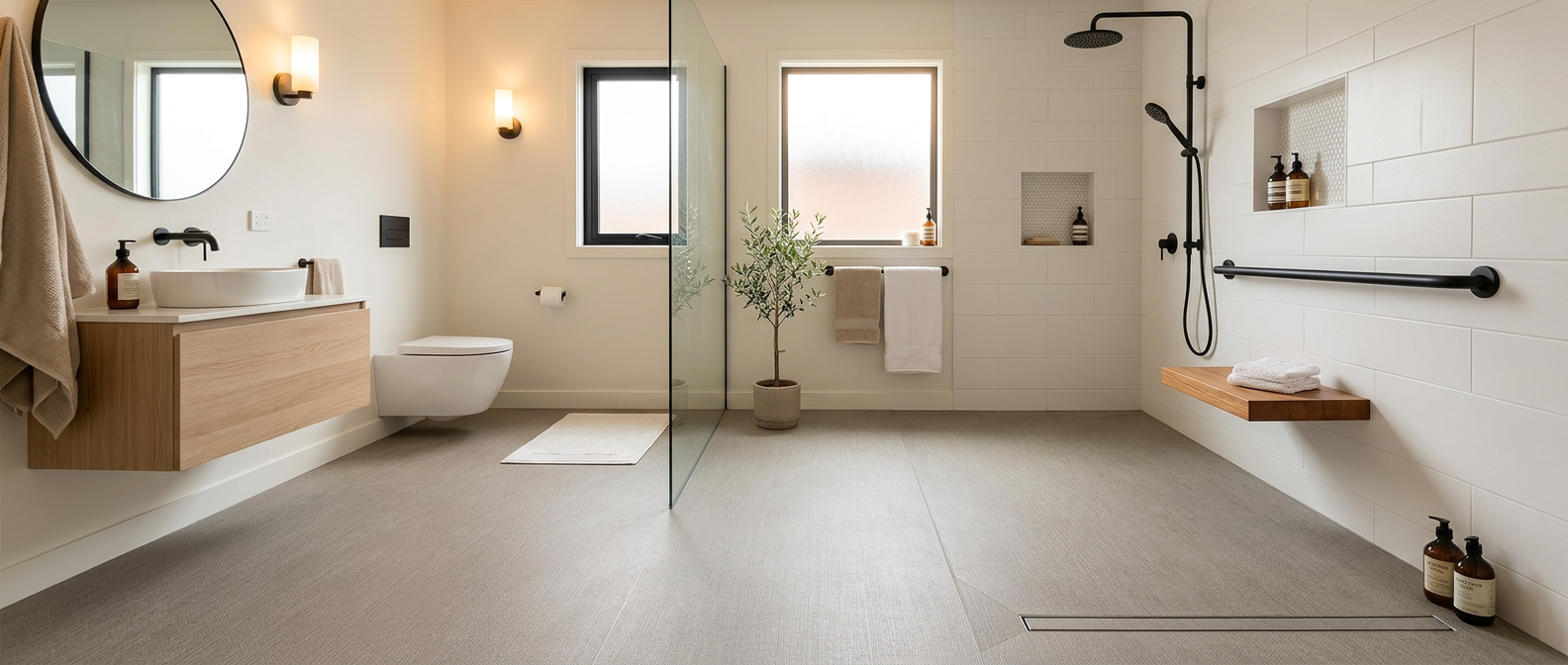
Why Bathroom Floors Are So Dangerous
Water, soap, and smooth surfaces are a recipe for disaster. Bathrooms combine all three. A wet floor can become dangerously slippery in seconds, and the hard surfaces mean that even a minor fall can lead to serious injury.
- Falls in the bathroom are among the most common causes of home injury for people over 65.
- Standard ceramic and polished tiles offer very little grip when wet.
- Even "non-slip" bath mats can shift or curl at the edges, creating a trip hazard.
- Many homeowners only address the issue after an accident has already happened.
The problem isn't just age-related. Anyone can slip - and the consequences can be severe.
What Makes Flooring "Safe" for a Bathroom?
Not all flooring marketed as "non-slip" is created equal. In the UK, slip resistance is measured using the Pendulum Test Value (PTV), a standard recognised by the Health and Safety Executive (HSE). For wet bathroom conditions, a PTV of 36 or higher is recommended to classify as low slip potential.
European R-Ratings are also widely used. For bathrooms and wet rooms, aim for:
- R10 - minimum acceptable for a dry bathroom.
- R11 - recommended for showers and areas with regular water exposure.
- R12 - ideal for walk-in wet rooms and high-risk environments.
Always check these ratings before purchasing - don't rely on appearance or general product descriptions alone.
The Best Bathroom Safety Flooring Options
There are several highly effective flooring types designed specifically for wet, high-risk environments. Here's a breakdown of the most popular:
Safety Vinyl (Sheet Vinyl)
This is widely regarded as the top choice for accessible and elderly-friendly bathrooms. Laid in a single seamless sheet, it eliminates grout lines and edges that can cause trips. It's fully waterproof, warm underfoot, and comes in a huge range of modern designs. Leading ranges - such as those from Altro and Polyflor - are specifically engineered for barefoot wet conditions.
Rubber Flooring
Rubber offers outstanding grip and, crucially, shock absorption. If a fall does occur, the softer surface significantly reduces the risk of fractures. Once associated with clinical or industrial settings, modern rubber flooring is now available in stylish residential finishes.
Textured Luxury Vinyl Tiles (LVT)
Want the look of wood or stone without the slipping risk? Textured LVT delivers both aesthetics and safety. It's warmer than real stone, easy to maintain, and resistant to moisture - as long as you choose a version rated for high-humidity environments.
Textured Porcelain & Mosaic Tiles
Tiles remain a popular choice, but the finish matters enormously. Matte or honed textures dramatically increase grip compared to polished surfaces. Mosaic tiles are especially effective in shower areas - the dense network of grout lines creates natural traction underfoot.
Smart Design Tips That Make a Real Difference
The right flooring is just one part of a safer bathroom. These design choices amplify the benefits:
- Level thresholds: Eliminate steps between the hallway and bathroom, and consider a walk-in wet room to remove shower tray lips entirely.
- Underfloor heating: Beyond comfort, it dries wet surfaces faster - shrinking the window of slip risk after bathing.
- High colour contrast: For those with visual impairments, a floor that clearly contrasts with walls and fixtures helps with spatial orientation and prevents missteps.
- Avoid loose bath mats: Replace standard fabric mats with rubberised, suction-backed versions - or better yet, integrate anti-slip texture directly into the flooring itself.
Could You Be Eligible for a Grant?
In the UK, homeowners adapting a bathroom for an elderly or disabled person may qualify for the Disabled Facilities Grant (DFG). This government-backed scheme can help cover costs for installing level-access showers, anti-slip flooring, and other accessibility improvements. An Occupational Therapist (OT) assessment is usually required - contact your local council to start the process.
Similar support schemes exist in Ireland, New Zealand, and South Africa, often through local disability support services or housing assistance programmes. It's always worth exploring what financial help may be available before committing to a full renovation.
What Should You Look for When Searching for Options?
The right bathroom safety flooring depends heavily on your specific circumstances - the size of the bathroom, who will be using it, your budget, and the type of existing fixtures. What works in a compact flat in Dublin may differ from what's best for a large family bathroom in Johannesburg or Auckland.
Factors to consider when narrowing down your search include:
- Slip resistance rating (PTV or R-Rating)
- Material - vinyl, rubber, LVT, or tile
- Ease of installation and maintenance
- Compatibility with underfloor heating
- Budget and availability of local suppliers
Speaking with a specialist flooring retailer or bathroom accessibility consultant in your area will give you the most relevant, personalised guidance.
The Bottom Line: Don't Wait for an Accident
Bathroom safety flooring isn't just a product category - it's a preventative investment in wellbeing. Whether you're upgrading for an elderly relative, future-proofing your own home, or simply making a smarter renovation decision, the floor you choose matters more than most people realise.
The technology has advanced significantly, and today's safety flooring options are as attractive as they are protective. There's genuinely no reason to compromise on either style or safety.
Explore the latest options, compare suppliers, and find the solution that fits your home and your needs. A little research now could prevent a serious injury later - and that's a worthwhile investment by any measure.