
The Hidden Auctions Where Impounded Bikes Sell for Pennies
Scroll through any local buy-and-sell page long enough and you'll spot the same question over and over: how did that person get a barely-used mountain bike for less than the price of a dinner out? The answer, more often than not, traces back to a police impound auction. Every year, thousands of bicycles pile up in municipal storage facilities, unclaimed after being recovered from theft cases, confiscated from code violations, or simply abandoned. Departments don't want to store them forever, so they get liquidated, often for a fraction of retail value.
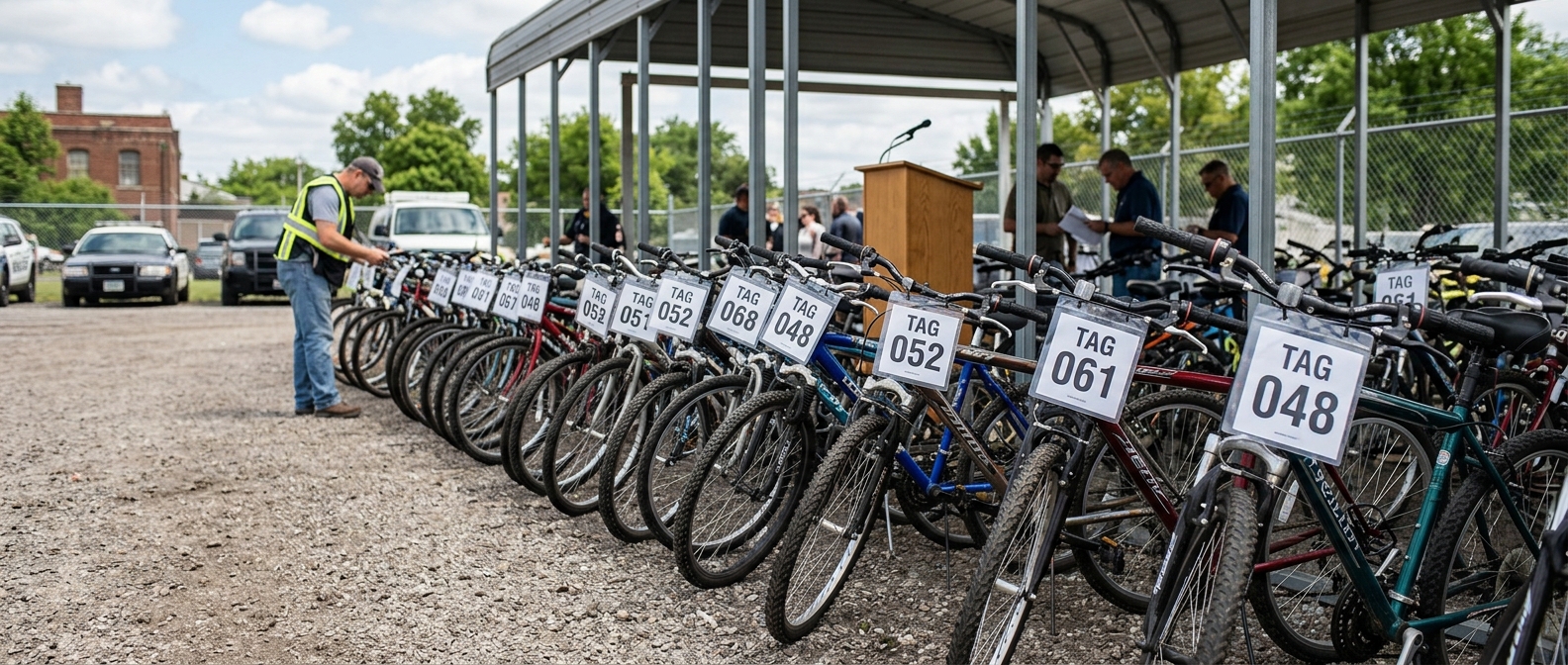
It sounds almost too good to be true. But the process is real, it's legal, and it's happening in cities across the country right now. The catch is that most people don't know where to look, how the process works, or what mistakes to avoid. That gap in knowledge is exactly why so many great deals go to the same small group of repeat bidders, while everyone else keeps paying full price at the bike shop.
Why Police Departments End Up With So Many Bicycles
Bicycles are among the most commonly stolen items in urban areas, largely because they're easy to grab and hard to trace once the wheels start turning. When police recover a stolen bike, they're required to hold it for a set period, usually 30 to 90 days depending on local law, to give the rightful owner a chance to claim it.
Here's the problem: most owners never come forward. Maybe they didn't record the serial number. Maybe they assumed it was gone for good and already bought a replacement. Whatever the reason, unclaimed bikes pile up fast, and evidence rooms and storage lots simply weren't built to hold onto them indefinitely.
Add in bikes seized from abandoned property, campus violations, and homeless encampment clearings, and you end up with a steady stream of inventory that has to go somewhere. That somewhere is usually a public auction.
Why Most Shoppers Miss Out on These Deals
If impound bike auctions are legal and public, why doesn't everyone know about them? A few reasons come up again and again.
- Auctions are often run by third-party companies contracted by the police department, not the department itself, so they don't show up in a simple search for "police auction."
- Listings are frequently regional or even hyper-local, meaning a great sale in one county might never appear on a statewide site.
- Many auctions still run in a hybrid format, combining in-person previews with online bidding, which confuses first-timers who expect one or the other.
- Terminology varies by jurisdiction. Some call it "surplus property," others "unclaimed evidence," others simply "city auction."
The result is a fragmented system that rewards people who know exactly what to search for and punishes everyone else with higher prices at retail stores.
What These Auctions Actually Look Like
Contrary to the image of a dusty warehouse with a gavel-banging auctioneer, most modern impound auctions run online. Bidders create an account, browse photos and descriptions of each lot, and place bids over a window that can last anywhere from a few hours to several days.
Bicycles are typically sold "as-is," which means:
- No warranty or return policy.
- Minor cosmetic damage or missing accessories are common.
- Some listings bundle multiple bikes into a single lot, which can mean an even lower per-bike cost.
Starting bids are often shockingly low, sometimes just a few dollars, though popular models can climb once bidding wars kick in. Buyers who do their homework on typical resale value tend to walk away with the best margins.
Mistakes First-Time Bidders Make
Even with low starting prices, it's easy to lose money if you're not careful. Common missteps include:
- Skipping the inspection period and getting stuck with a bike that needs expensive repairs.
- Forgetting to factor in buyer's premiums or pickup fees, which can add 10 to 20 percent to the final cost.
- Bidding emotionally on a "cool" bike rather than checking real resale demand.
- Assuming all auctions require in-person pickup, when many now ship or offer regional drop points.
Experienced bidders treat every listing like a small research project. They check frame condition in photos, look up the model's original retail price, and set a strict maximum bid before the auction even opens.
The Search Intent Pivot
Knowing that these auctions exist is only half the equation. The real advantage comes from finding the specific auction houses and government surplus platforms operating in your area right now, since inventory, schedules, and starting bids shift constantly based on local police activity. A county auction happening this week in one state might be completely different from what's listed two counties over. That's why so many bargain hunters start by searching for active police auction and government surplus listings near their zip code, comparing current bicycle lots, upcoming auction dates, and verified auction platforms before placing a single bid.
Getting Started the Smart Way
If the idea of scoring a bike for a fraction of retail sounds appealing, the next step is simple curiosity. Look into which platforms your local police department or municipality actually uses. Some cities partner with well-known government auction sites, while others use smaller regional services. Comparing a few options before committing time or money tends to separate happy bidders from frustrated ones.
This isn't a guaranteed way to get rich or furnish an entire garage overnight. It's a legitimate, often overlooked channel that rewards a bit of research with real savings. For anyone curious enough to look a little closer, the listings are out there, waiting to be found.