
The Complete Guide to Invisible Hearing Aids
Hearing loss affects millions of people - yet one of the biggest reasons people delay treatment is simple: they don't want anyone to know. The good news? Today's invisible hearing aids are so small and discreet that most people around you will never notice them. If you've been curious about what these tiny devices can actually do, this guide covers everything you need to know - from how they work to what to look for before making a decision.
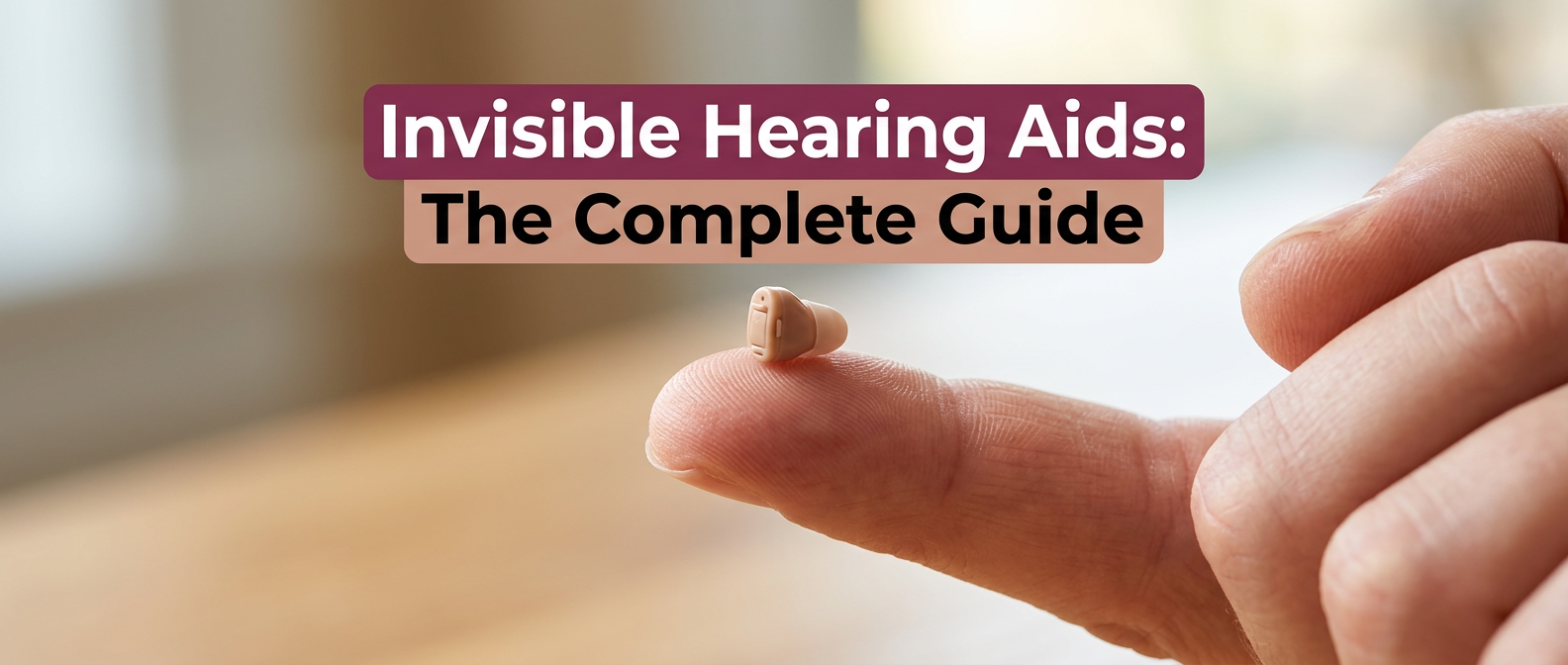
What Exactly Are "Invisible" Hearing Aids?
The term "invisible hearing aid" typically refers to two specific styles:
- Invisible-In-Canal (IIC): The smallest custom hearing aids available. They sit deep inside the ear canal - past the second bend - making them virtually undetectable from the outside. Each one is custom-molded to the exact shape of your ear.
- Completely-In-Canal (CIC): Slightly larger than IICs, these fit just inside the ear canal opening. They're mostly hidden, though a tiny extraction cord may be barely visible at certain angles.
- Extended Wear (24/7): Placed deep in the ear canal by an audiologist, these are worn continuously for months - including while sleeping and showering - without any daily removal needed.
Each style has its own advantages. The right fit depends on your ear canal's size and shape, your level of hearing loss, and your personal lifestyle preferences.
Why So Many People Are Making the Switch
Traditional hearing aids - the ones that loop behind the ear - have long carried a social stigma. Many people associate them with old age or disability, which leads to years of untreated hearing loss and the isolation that comes with it.
Invisible hearing aids change that equation entirely. Because they sit deep inside the ear canal, they blend naturally with the shadows of your outer ear. Most people describe wearing them as simply "forgetting they're there."
Beyond appearance, there's a practical acoustic benefit: the microphone sits inside the ear canal, allowing it to use the natural shape of your outer ear (called the pinna) to funnel sound. This creates a more natural listening experience and better directional awareness - knowing where a sound is coming from.
The Technology Inside These Tiny Devices
Don't let the size fool you. Today's invisible hearing aids pack impressive technology into a nearly microscopic shell:
- AI-Powered Sound Processing: Deep Neural Networks analyze your sound environment in real time, automatically separating speech from background noise. No manual adjustments needed as you move from a quiet room to a busy restaurant.
- Bluetooth LE Audio: Newer models now support Bluetooth Low Energy, enabling direct streaming of phone calls and audio - a feature previously impossible in such a small device.
- Rechargeability: Some of the latest IIC models now offer rechargeable batteries, eliminating the need to handle tiny disposable cells.
- Automatic Environment Detection: Because most invisible aids lack physical buttons, they rely on smart sound scanning to switch profiles automatically - from "quiet office" to "windy outdoor" settings - without any user input.
Key Benefits Worth Knowing
Here's a quick summary of why so many people choose invisible hearing aids over traditional styles:
- Complete Discretion: Virtually undetectable during normal daily activity.
- Natural Sound Quality: Uses the ear's natural anatomy to improve directional hearing.
- Wind Noise Resistance: Deep placement naturally shields microphones from wind - a major advantage for outdoor activities.
- Zero Interference: No behind-the-ear component means no conflict with glasses, face masks, helmets, or oxygen tubes.
- Comfortable Wear: Custom-molded versions are shaped precisely to your ear canal, making them comfortable for extended daily use.
Important Considerations Before You Decide
Invisible hearing aids are excellent - but they're not the right fit for every person or every type of hearing loss. Here are the key things to consider:
- Ear Canal Anatomy: If your ear canal is very narrow or sharply curved, a custom IIC may not physically fit. An audiologist can assess this quickly.
- Degree of Hearing Loss: Invisible aids work best for mild to moderate hearing loss. Severe or profound hearing loss typically requires more powerful, larger devices.
- Dexterity: Many models still use small disposable batteries that require fine motor skills to handle. Rechargeable options help, but it's worth considering.
- Maintenance: Because they sit deep in the ear canal, invisible aids are more exposed to earwax and moisture. Regular cleaning is essential.
- Price Range: Custom IIC devices are typically among the higher-priced options on the market. However, over-the-counter (OTC) alternatives have become increasingly capable and accessible at lower price points.
Prescription vs. Over-The-Counter: What's the Difference?
One of the biggest shifts in hearing aid access is the rise of over-the-counter (OTC) devices. In the U.S., adults with mild to moderate hearing loss can now purchase hearing aids directly without a prescription.
OTC invisible hearing aids - like those from brands such as Eargo and Sony - use flexible silicone tips to fit a wide range of ear canals without custom molding. They're self-fitting and app-controlled, making them a practical entry point for many first-time users.
Custom prescription IICs, on the other hand, are made from a physical or 3D digital impression of your ear. They offer a more precise acoustic fit, greater depth of placement, and are generally recommended for moderate-to-severe hearing loss or those who need a more tailored solution.
Finding the Right Invisible Hearing Aid for You
With so many models and styles available, narrowing down the right invisible hearing aid comes down to a few personal factors: your hearing test results, your ear canal's anatomy, your lifestyle, and your budget. A licensed audiologist can assess all of these in a single appointment, and many now offer 3D digital ear scanning for a precise custom fit.
If you're exploring OTC options first, reading independent expert reviews and comparing specific features - like battery type, Bluetooth capability, and noise reduction performance - is the best place to start.
The Bottom Line
Invisible hearing aids have moved well beyond a cosmetic novelty. They now represent some of the most advanced hearing technology available - packed into a device small enough to disappear entirely inside your ear. Whether you're considering your first hearing aid or looking to upgrade from a bulkier model, the invisible option is worth a serious look.
Your hearing health is personal - and so is the right device for your needs. Taking the time to explore your options, understand the technology, and match a device to your lifestyle can make a significant difference in your daily quality of life. The more informed you are, the better equipped you'll be to find a solution that truly works for you.