
💡 Discover More About Electronic Test Equipment in 2026
Electronic test equipment has quietly become one of the most important categories of technology in 2026. Whether you work in manufacturing, automotive, telecommunications, or even a home workshop, the tools used to test, measure, and validate electronics are evolving fast - and the gap between those who keep up and those who don't is growing wider every single day. If you've been wondering what's new, what's worth investing in, or simply how to make smarter decisions in this space, you're in the right place.
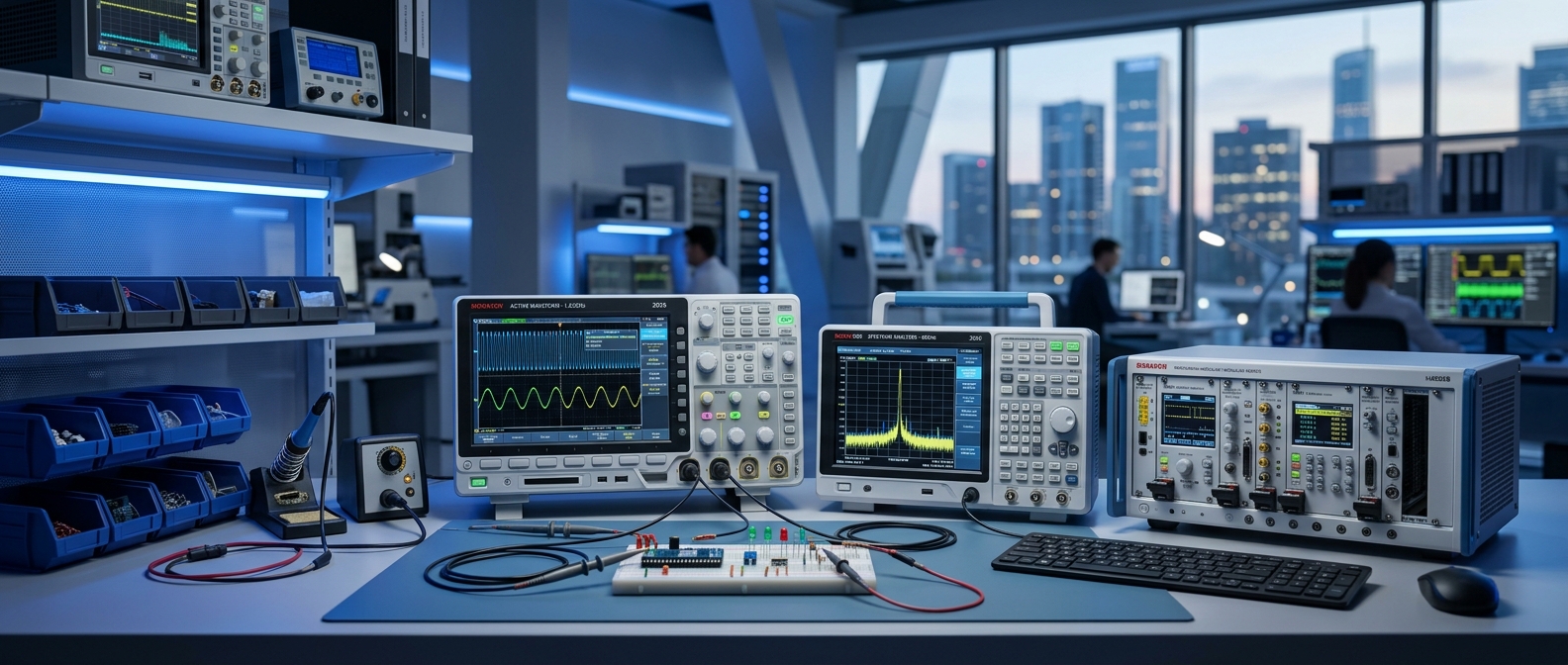
Why Electronic Test Equipment Matters More Than Ever
Modern electronics are incredibly complex. From AI-powered chips to high-voltage electric vehicle battery systems, the components inside today's devices require precision testing that older tools simply can't handle.
In 2026, three major forces are driving demand for advanced test equipment:
- 5G Advanced and early 6G development - pushing the limits of signal testing into millimeter-wave frequencies
- The EV boom - requiring highly specialized equipment to test battery management systems and power electronics
- AI semiconductor complexity - wafer-level testing of 3D ICs and chiplets is now the standard, not the exception
These aren't niche concerns. They affect the quality, safety, and reliability of products used by millions of people every day.
The Rise of AI-Powered Testing
One of the biggest shifts happening right now is the integration of Artificial Intelligence into test and measurement platforms.
It's not just about faster readings. AI-driven test systems in 2026 can:
- Predict failures before they happen using machine learning models
- Automatically suggest process improvements based on historical test data
- Run closed-loop control on manufacturing floors with minimal human involvement
Tools like Automated Optical Inspection (AOI) systems have gone from simple defect spotters to intelligent quality management platforms. For engineers and procurement managers, this changes how you evaluate and budget for test equipment entirely.
Modular and Software-Defined Instruments: The New Standard
Buying a dedicated, single-purpose instrument is becoming an outdated approach. In 2026, the industry has shifted hard toward modular platforms - particularly PXI and LXI-based systems - where individual modules can be swapped or upgraded independently.
Why does this matter? Because technology standards change constantly. A modular setup means your investment is future-proof. You're not replacing the whole system every two years; you're upgrading the relevant module and moving on.
Software-defined instrumentation is also transforming how labs operate. Features that used to require dedicated hardware can now be unlocked through a software license - dramatically reducing costs and physical bench space.
Automated Test Equipment (ATE): Solving the Workforce Gap
Finding qualified electronics technicians is harder than ever. This is accelerating the adoption of Automated Test Equipment (ATE), which can run high-throughput testing with minimal human intervention.
The ATE market is on a strong growth trajectory, and the reasons are clear:
- Workforce shortages in technical roles are showing no sign of reversing
- System-on-Chip (SoC) devices are too complex for manual test workflows
- Automotive and consumer electronics demand zero-defect tolerances
For businesses running production lines, ATE isn't a luxury anymore - it's a baseline requirement to stay competitive.
Smart Labs and IoT-Connected Instruments
The concept of a "smart lab" has moved from buzzword to reality. In 2026, test instruments are no longer siloed. They communicate with each other, share data in real time, and integrate directly with Laboratory Information Management Systems (LIMS).
IoT-connected test equipment allows teams to:
- Monitor instrument health and predict calibration needs remotely
- Run diagnostics without interrupting production
- Centralize compliance records automatically
Leading providers like Keysight Technologies and Tektronix are embedding these capabilities as standard, not optional add-ons.
Equipment-as-a-Service: Accessing Top Gear Without the Big Price Tag
High-end test equipment is expensive. An advanced spectrum analyzer or signal generator can run into six figures. For many R&D teams and smaller companies, outright purchasing simply isn't viable.
This is why Equipment-as-a-Service (EaaS) models are booming in 2026. Options include:
- Short-term rental - ideal for specific projects or product validation cycles
- Long-term leasing - predictable costs with upgrade flexibility
- Certified used equipment - professionally calibrated and significantly cheaper than new
If your team needs access to cutting-edge instruments without committing to full purchase prices, the EaaS model is worth exploring seriously.
Calibration: The Step Most People Underestimate
Buying great equipment is only half the story. Calibration remains the largest single service segment in the test and measurement market - and for good reason.
Inaccurate equipment produces inaccurate results. In regulated industries like medical devices, aerospace, and automotive, that's not just a quality issue - it's a legal one. In 2026, stricter global traceability standards mean that calibration schedules are now under greater scrutiny than ever.
Whether you're managing existing instruments or sourcing new ones, building a clear calibration management process into your workflow is non-negotiable.
What Should You Be Looking Into?
The best electronic test equipment for your situation depends heavily on your specific industry, application, and budget. An EV engineer has very different needs from a telecom developer or a PCB prototyping hobbyist. The market in 2026 offers more options - and more complexity - than at any point before.
Exploring suppliers, comparing specifications, and understanding service agreements are all critical steps before making any purchasing decision. Fortunately, the information is more accessible than ever if you know where to search.
The Bottom Line
Electronic test equipment in 2026 is defined by intelligence, integration, and adaptability. From AI-powered automated testers to modular software-defined platforms, the industry is evolving at a pace that rewards those who stay informed. Whether you're upgrading an existing lab setup, sourcing equipment for a new product line, or simply trying to understand what's available in the market today, doing your research is the smartest first move you can make.