
Email Marketing Strategy & Automation Training Explained
You've probably heard it a hundred times: "The money is in the list." But if your emails are getting ignored, your open rates are flat, and your campaigns feel like shouting into a void - the real problem isn't your list. It's your strategy. Email marketing remains one of the highest-ROI digital channels available today, yet most people are using it the wrong way. The good news? With the right training and automation tools, turning your email list into a revenue engine is more achievable than ever.
Why Most Email Campaigns Fail Before They Even Start
The biggest mistake marketers make is treating every subscriber the same. Sending one generic newsletter to your entire list might feel efficient, but it's quietly killing your results. Subscribers have different needs, different buying stages, and different interests. When your message doesn't match where they are in their journey, they tune out - or worse, unsubscribe.
Common reasons email campaigns underperform:
- No clear segmentation strategy
- Weak or generic subject lines
- No automation sequences to nurture leads
- Sending too often - or not often enough
- No A/B testing to improve performance over time
What Email Marketing Strategy Actually Looks Like
A solid email marketing strategy isn't just about writing good copy - it's a system. It starts with understanding who you're emailing, what they need to hear, and when they need to hear it. Strong strategy involves:
- List segmentation: Grouping subscribers by behavior, interest, or purchase history
- Content mapping: Aligning emails to each stage of the buyer journey
- Frequency planning: Establishing a consistent, non-intrusive send schedule
- Goal setting: Defining clear KPIs like open rate, click rate, and revenue per email
When these elements work together, your emails stop feeling like interruptions - and start feeling like helpful, timely conversations.
The Power of Email Automation
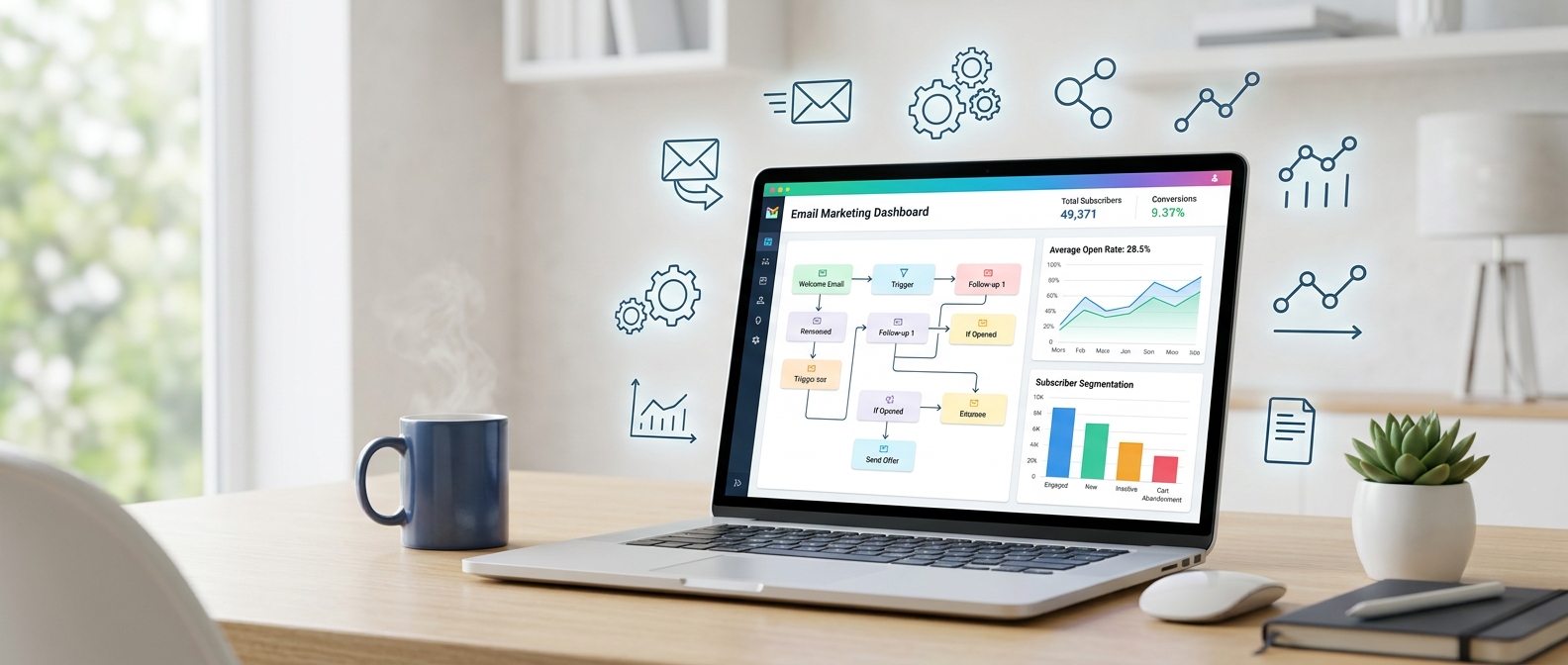
Automation is where email marketing goes from good to extraordinary. Instead of manually sending campaigns, automation lets you build sequences that work around the clock - welcoming new subscribers, nurturing cold leads, recovering abandoned carts, and re-engaging inactive users.
Popular automation flows that drive results:
- Welcome Series: Introduce your brand and set expectations immediately after sign-up
- Lead Nurture Sequences: Educate and build trust with prospects over days or weeks
- Post-Purchase Flows: Upsell, cross-sell, and encourage reviews after a sale
- Win-Back Campaigns: Re-engage subscribers who haven't opened in 60-90 days
- Abandoned Cart Emails: Recover lost revenue from shoppers who didn't complete checkout
The best part? Once these sequences are built, they run automatically - generating revenue while you focus on growing your business.
Why Training Makes All the Difference
Email platforms like Mailchimp, Klaviyo, ActiveCampaign, and ConvertKit offer powerful features - but most users only scratch the surface of what's possible. Proper training teaches you not just how to use the tools, but why certain strategies work and how to adapt them for your specific audience.
What good email marketing training covers:
- Setting up and structuring automation workflows
- Writing high-converting subject lines and email copy
- Deliverability best practices to stay out of spam folders
- Reading analytics and making data-driven decisions
- Compliance with regulations like CAN-SPAM and GDPR
Whether you're a business owner, freelancer, or marketing professional, investing in structured training accelerates results dramatically - cutting the trial-and-error phase and replacing it with proven frameworks.
Choosing the Right Platform for Your Goals
Not all email marketing platforms are created equal. The right choice depends on your business size, industry, and technical comfort level. E-commerce brands often thrive on Klaviyo due to its deep Shopify integration. Service-based businesses and coaches tend to prefer ActiveCampaign or ConvertKit for their sophisticated tagging and automation logic. Beginners often start with Mailchimp for its ease of use and free tier.
Before committing to any platform, consider:
- Your list size now and projected growth
- Your primary use case (e-commerce, lead gen, newsletters)
- Integration with your existing CRM or website
- Your budget for monthly subscription costs
Tips to Improve Your Email Results Starting Today
You don't need to overhaul everything at once. Small, consistent improvements compound over time:
- Test two different subject lines every send
- Clean your list every 90 days to remove inactive subscribers
- Personalize beyond just using the subscriber's first name
- Optimize every email for mobile - most opens happen on phones
- Add a clear, single call-to-action in every email
Where to Go From Here
Email marketing strategy and automation training are not one-size-fits-all. The best approach - and the best platform, tools, and courses - depends heavily on your industry, audience size, and business goals. Whether you're starting from scratch or looking to scale an existing program, there's always a more targeted path forward. The most effective next step is to explore the specific solutions, courses, and tools that match your exact situation - because generic advice only gets you so far.
Email marketing done right is one of the most reliable ways to build customer relationships and drive consistent revenue. The strategies and automation techniques available today make it possible to work smarter - not harder - while delivering more personalized, timely messages to your audience. Exploring your options and finding the right training or platform for your specific needs is the single best investment you can make in your marketing this year.