
Smart Energy Tools That Cut Your Bills This Year
Smart Energy Tools That Cut Your Bills This Year
Your electricity bill just went up again. You stare at the number, and it makes no sense. You didn't change your habits, yet you're paying more than ever. If this sounds familiar, you're not alone. Millions of households are quietly bleeding money every month because they have no real visibility into where their energy actually goes. The good news? A new generation of energy management tools is changing that, and understanding how they work could be the difference between guessing and knowing.
The Problem With "Just Turning Things Off"
For decades, the standard advice was simple: turn off lights, unplug appliances, lower the thermostat. It helps a little. But it doesn't solve the real issue.
Most homes have no idea which appliances are the actual energy hogs. Is it the old fridge? The water heater? The HVAC system running longer than it should? Without data, every decision is a guess.
That guesswork adds up. A household might cut back on lighting, feel like they're saving, and still see a bill that barely moves. The bigger culprits are often invisible until you measure them directly.
Why Energy Waste Keeps Growing
Homes today run more devices than ever. Smart speakers, multiple TVs, gaming consoles, EV chargers, and connected appliances all draw power around the clock, even in standby mode.
Add in aging insulation, outdated HVAC systems, and inconsistent thermostat habits, and the waste compounds quickly. Many homeowners don't realize that a poorly maintained system can run 20-30% less efficiently than a properly serviced one, silently inflating monthly costs.
This is exactly the gap that modern energy management tools were built to close.
What Energy Management Tools Actually Do
Unlike the old approach of blind guessing, these tools give homeowners a clear picture of consumption in real time. Generally, they fall into a few categories:
- Smart meters and monitors: Track usage device-by-device or circuit-by-circuit.
- Smart thermostats: Learn your schedule and adjust heating or cooling automatically.
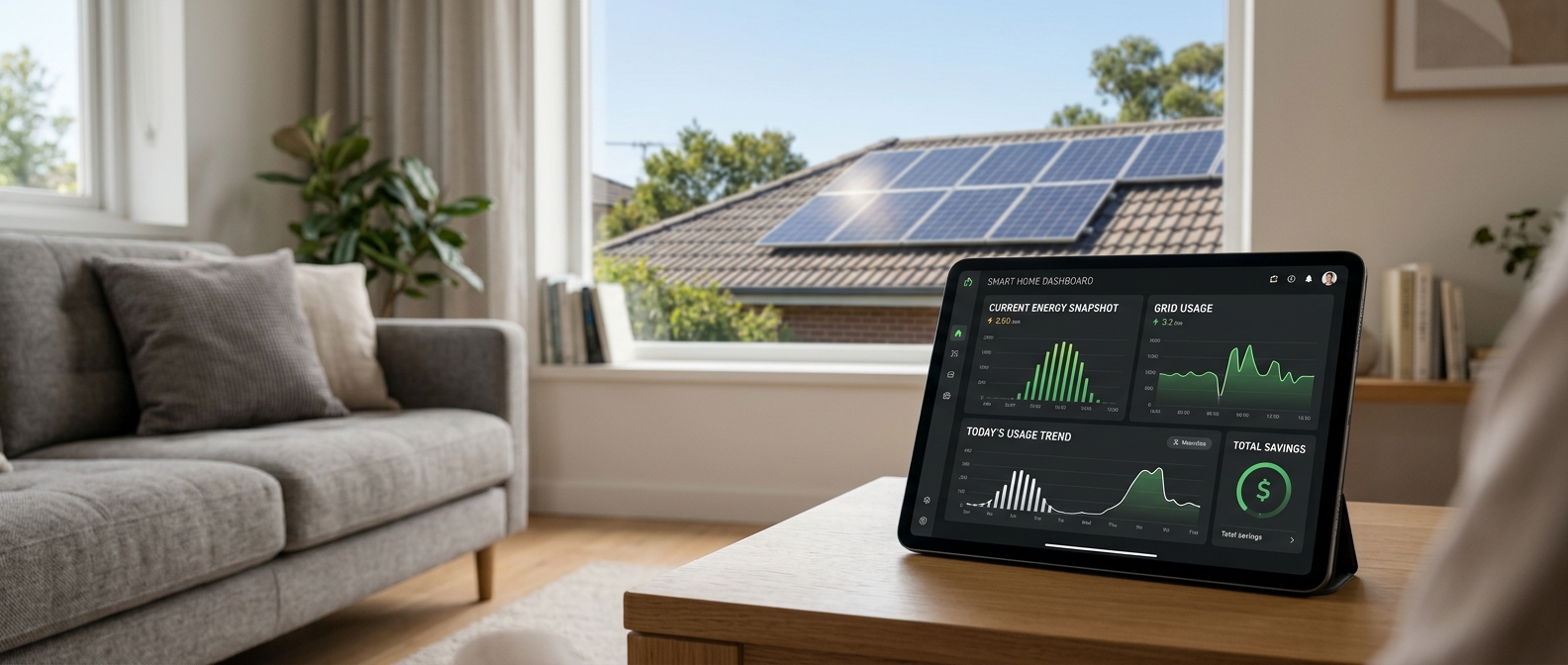
- Home energy management systems (HEMS): Centralize control of solar, battery storage, and appliances into one dashboard.
- Utility apps and alerts: Send notifications when usage spikes unexpectedly.
Together, these tools transform energy from an invisible expense into something you can actually see, track, and control.
The Data Behind the Shift
Interest in home energy monitoring has grown sharply as electricity prices climb and more households add solar panels or EV chargers. The U.S. Department of Energy notes that behavioral and technology-driven changes, like monitoring and smart scheduling, can meaningfully reduce household energy consumption over time.
That's a significant shift from simply "trying to use less" to actively managing consumption based on real numbers.
Real Households, Real Results
Consider a typical scenario: a family installs a smart monitor and discovers their old chest freezer in the garage is consuming nearly as much power as their entire kitchen. They replace it with an energy-efficient model and immediately see the difference on their next bill.
Or take a homeowner who installs a smart thermostat and realizes their HVAC system was running full blast while they were at work all day. A simple schedule adjustment cuts unnecessary heating and cooling hours.
These aren't dramatic renovations. They're small, data-driven corrections that only became possible once the right tools revealed the problem.
Choosing the Right Setup Isn't One-Size-Fits-All
Here's where things get more complex. Not every home needs the same setup.
- A small apartment might only need a simple plug-in monitor.
- A home with solar panels needs a system that integrates battery storage and grid usage.
- A larger house with multiple HVAC zones may benefit from a full home energy management system with zone-specific controls.
Budget matters too. Basic monitors can cost very little, while comprehensive whole-home systems represent a bigger investment, one that often pays for itself through savings over time, but the payback period varies by usage patterns and local electricity rates.
Why Your Specific Situation Changes Everything
This is really the core issue: generic advice can only take you so far. The best energy management setup depends on factors that are unique to your household, including your local utility rates, your climate, the age of your home, and whether you already have solar or plan to add it.
Two neighbors with identical homes could need completely different solutions if one has an EV charger and the other doesn't. Someone in a hot, humid climate has different priorities than someone dealing with harsh winters.
That's why so many homeowners are now searching for options tailored to their exact circumstances, comparing systems, providers, and pricing that reflect their specific location and energy habits, rather than relying on generic, one-size-fits-all recommendations found in broad articles.
Where to Go From Here
Understanding the basics of energy management tools is a strong first step. But the details, like which brands integrate well with existing solar setups, which monitors work best for specific utility providers, or which systems offer the fastest return on investment, depend heavily on individual circumstances.
If lowering your energy costs is a priority, it's worth exploring the specific tools and providers available in your area to see what fits your home, your budget, and your goals.
Final Thoughts
Energy waste isn't inevitable. It's often just invisible until you have the right tools to see it. From smart thermostats to full home energy management systems, today's technology makes it possible to move from guessing to knowing.
The next step is figuring out which combination of tools actually fits your home. That answer looks different for everyone, and it's worth taking the time to explore the options that match your specific needs.