
Your Guide to Studying Physical Therapy as an Adult
Your Guide to Studying Physical Therapy as an Adult
You scroll past another job posting. Another friend switches careers. And that same thought creeps back in: "What if I became a physical therapist?" It sounds like a fantasy reserved for twenty-somethings fresh out of college. But here's the truth nobody tells you: adult learners are quietly filling physical therapy programs across the country, and many thrive precisely because of their life experience, not despite it.
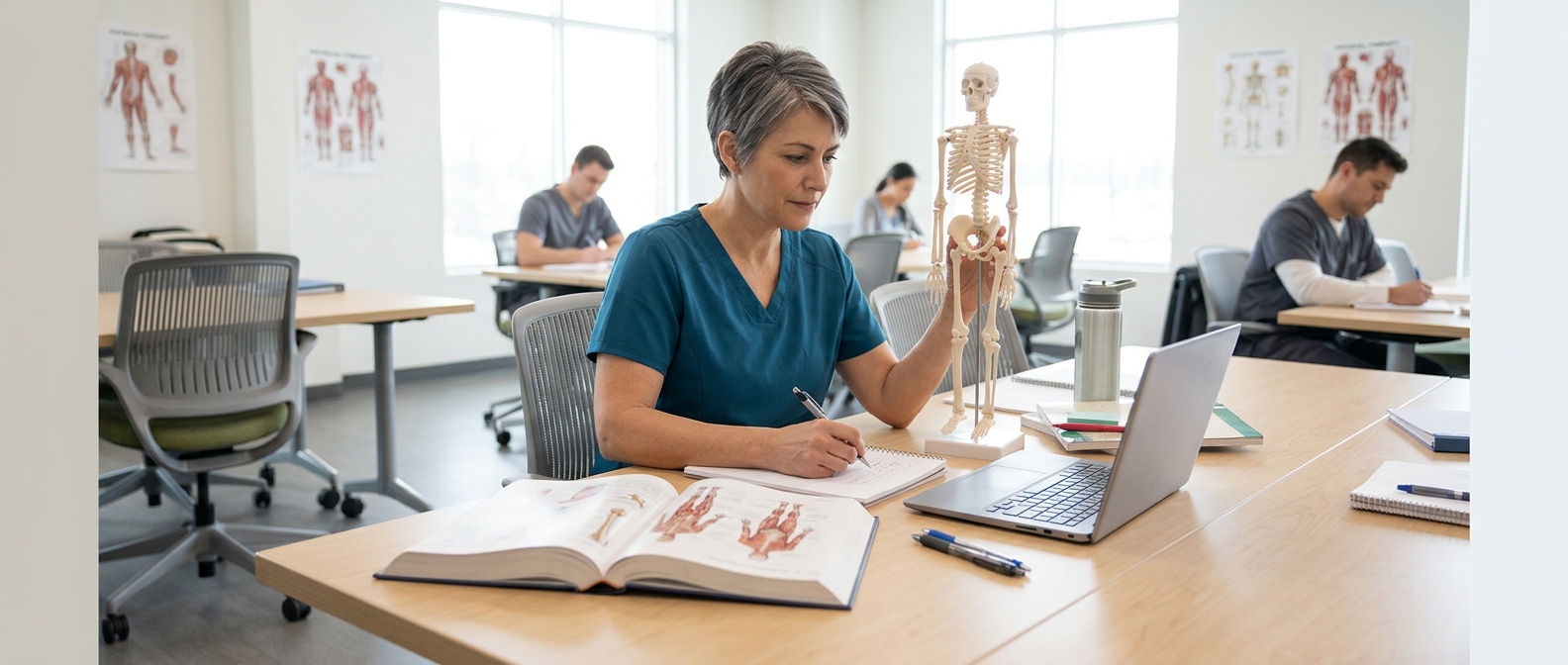
Why the "Too Old" Myth Needs to Die
Most people assume physical therapy school is only for young graduates. That belief stops countless capable adults before they even research their options.
In reality, physical therapy programs value maturity. Patients often prefer providers who understand life transitions, chronic pain, and the emotional weight of recovery. Career-changers bring communication skills and empathy that twenty-two-year-olds are still developing.
Age is not the obstacle people imagine. The real challenges are logistical: time, money, and figuring out which path fits your current life.
The Problem With "Just Go Back to School"
That advice sounds simple. It rarely is.
Adult learners face a different reality than the average undergraduate:
- Mortgages, rent, or family expenses that don't pause for class schedules
- Prerequisite courses that may need to be retaken if outdated
- Balancing work hours with lecture times and clinical rotations
- Choosing between full-time immersion or a slower, part-time route
Without a clear plan, these obstacles feel overwhelming. That's exactly why so many people give up on the idea before ever requesting information from a program.
What the Path Actually Looks Like
Becoming a licensed physical therapist typically requires a Doctor of Physical Therapy (DPT) degree. But adults don't have to start from zero.
Here's the general structure many programs follow:
- Prerequisite coursework - anatomy, physiology, biology, and physics, often available through community colleges or online platforms
- Bachelor's degree - required before DPT admission, though some accelerated or bridge programs exist for career-changers
- DPT program - typically three years, combining classroom study with supervised clinical hours
- Licensing exam - passing the National Physical Therapy Examination (NPTE) to practice legally
Some universities now offer hybrid or evening formats specifically designed for working adults. Others provide credit for prior coursework, shortening the overall timeline.
Financing a Second Career Without Losing Your Mind
Tuition is the number one concern adult students raise. It's a legitimate worry.
But funding options extend far beyond traditional student loans:
- Employer tuition assistance, especially in healthcare-adjacent jobs
- Federal financial aid, which doesn't have an age cutoff
- Scholarships specifically for non-traditional or career-changing students
- State workforce development grants for high-demand healthcare fields
The catch: these programs vary enormously by state, school, and even by specific campus. What's available in one city may not exist two hours away.
The Question Most Adults Forget to Ask
People spend weeks deciding if they should become a physical therapist. They spend almost no time researching which programs actually accommodate working adults.
Not every DPT program is built the same. Some are rigid, full-time, and campus-only. Others offer:
- Weekend or evening class blocks
- Online prerequisite coursework
- Part-time clinical placement options
- Accelerated tracks for students with related healthcare backgrounds
Skipping this research step is the most common reason adult students feel blindsided halfway through their decision process.
What Career-Changers Actually Say
Adult students who've made the switch often describe two phases: doubt, then relief.
The doubt comes early - worrying about being the oldest in the room, questioning if it's "too late." The relief comes once they realize physical therapy schools are increasingly built for exactly this kind of student. Cohorts today often include people in their 30s, 40s, and beyond, many of whom came from unrelated first careers like teaching, business, or the military.
Your Next Step Depends on Your Specific Situation
Here's where general advice runs out. The right physical therapy program for you depends on factors that are deeply personal:
- Your location and whether nearby schools offer flexible formats
- Your current degree status and which prerequisites you still need
- Your budget and which financial aid programs you actually qualify for
- Your schedule and whether part-time or accelerated tracks make sense
Generic checklists can't answer these questions. What helps is looking directly into physical therapy programs designed for adult and non-traditional students in your area, comparing tuition structures, and understanding admission requirements based on your existing education.
Moving From Curiosity to a Real Plan
Wanting to become a physical therapist as an adult isn't unusual anymore. It's increasingly common, and schools have noticed. The remaining work is matching your specific circumstances, location, budget, and schedule with the programs built to support them.
If this path has been on your mind, the next logical step is exploring the physical therapy programs and adult-learner resources available where you live. The right information can turn a recurring thought into an actual, achievable plan.