
The Smart Buyer's Guide to Used Industrial Tools
Buying used industrial tools can be one of the smartest financial moves a contractor, small shop owner, or serious tradesperson can make. New industrial-grade equipment carries a price tag that can drain a budget fast - but the used market offers the same performance for a fraction of the cost. The key is knowing what to look for, where to find it, and how to avoid costly mistakes that turn a "great deal" into an expensive repair bill.
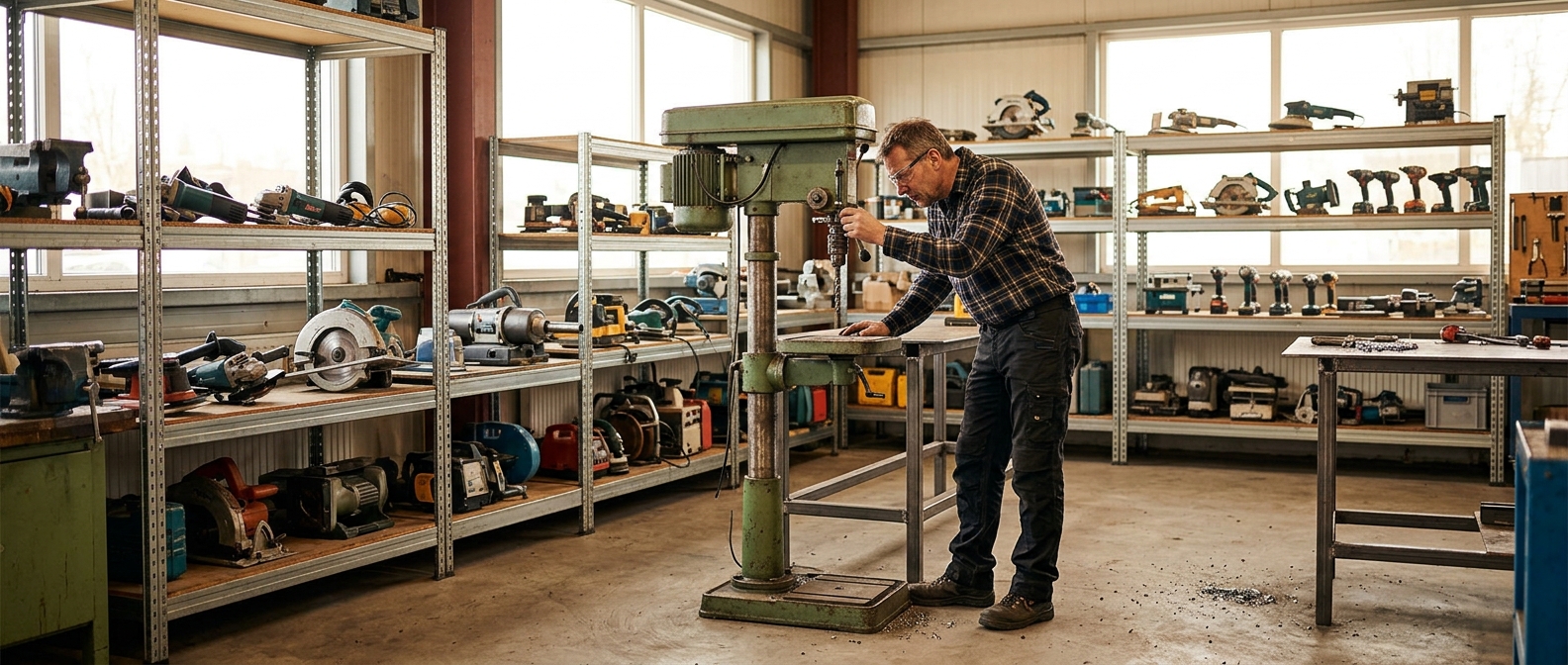
Why Used Industrial Tools Make Financial Sense
Industrial tools are built to last. A quality lathe, drill press, or air compressor manufactured a decade ago can still perform just as well today - if it has been properly maintained. Unlike consumer-grade tools, industrial equipment is engineered for thousands of hours of use, meaning a "used" label doesn't necessarily mean "worn out."
For small businesses and independent contractors, the savings can be significant. Redirecting that capital toward labor, materials, or other operational needs creates a real competitive advantage.
The Most Common Mistakes Buyers Make
Most people who regret a used tool purchase made one of these errors:
- Skipping a physical inspection. Photos can hide rust, cracks, or worn components. Always inspect in person when possible.
- Ignoring the maintenance history. A tool with no service records is a gamble. Ask the seller for documentation or at least a verbal history.
- Overlooking compatibility. Power requirements, spindle sizes, and accessory compatibility vary by brand and era. Confirm specs match your setup before committing.
- Buying from unreliable sources. Auction sites and private listings vary wildly in quality. Reputation matters.
- Forgetting hidden costs. Shipping, rigging, installation, and calibration can add hundreds - or thousands - to the final price.
What to Inspect Before You Buy
A thorough inspection is your best protection. Here's a practical checklist to run through:
- Check for physical damage: Look for cracks in the housing, bent components, or signs of impact damage.
- Test all moving parts: Switches, levers, and adjustments should move smoothly without grinding or resistance.
- Look for rust and corrosion: Surface rust on non-critical parts can be managed, but rust on precision surfaces or internal components is a red flag.
- Inspect electrical components: Worn wiring, scorched panels, or tripped thermal overloads can signal deeper electrical problems.
- Run it if you can: A tool that can't be powered on for a demo is a tool you should approach with caution.
Where to Buy Used Industrial Tools
The sourcing channel matters just as much as the tool itself. The most common options include:
- Industrial auctions: Liquidations from factories or shops can offer great prices, but inspection time is often limited.
- Dealer resellers: Reputable used equipment dealers often inspect, refurbish, and warranty their inventory - at a slightly higher price point.
- Online marketplaces: Platforms like Machinio, eBay Industrial, or Craigslist can be goldmines, but require extra due diligence.
- Direct from businesses: Shops that are upgrading or closing may sell directly. These deals can be excellent if you can verify the condition personally.
Tips for Negotiating the Best Price
The used equipment market is almost always negotiable. Come prepared:
- Research the new retail price and recent used sale prices for the exact model.
- Use any flaws you find during inspection as leverage for a lower price.
- Ask if accessories, tooling, or spare parts are included - these add real value.
- Be willing to walk away. There is almost always another listing.
When to Buy New Instead
Used isn't always the right answer. Consider buying new if:
- The tool requires high precision and calibration history is unknown.
- Safety certifications are critical and cannot be verified on used equipment.
- Replacement parts for older models are discontinued or very expensive.
- The total cost of reconditioning approaches the price of new.
Finding the Right Tool for Your Specific Needs
The used industrial tools market is vast - from CNC machines and welding equipment to forklifts, compressors, and hand tools. The best deal for a metalworking shop looks completely different from what's right for a construction crew or a woodworking studio. Your industry, workload, available space, and local service network all shape which tool is the right fit - and where you're most likely to find it at the right price.
That's why a general guide can only take you so far. The most valuable next step is searching for options specific to your trade, region, and budget - where real listings, local dealers, and current market pricing come together.
Start Your Search With Confidence
Understanding what to look for is only half the equation. The other half is knowing where to look for the specific type of used industrial tool you actually need. Whether you're sourcing a band saw, a hydraulic press, or a full CNC setup, the details of availability, pricing, and seller reputation vary significantly by category and location. Taking the time to research your specific equipment type will help you make a confident, informed purchase - and get the most value out of every dollar you invest.