
How High-Power Lasers Boost Efficiency in Manufacturing and Healthcare
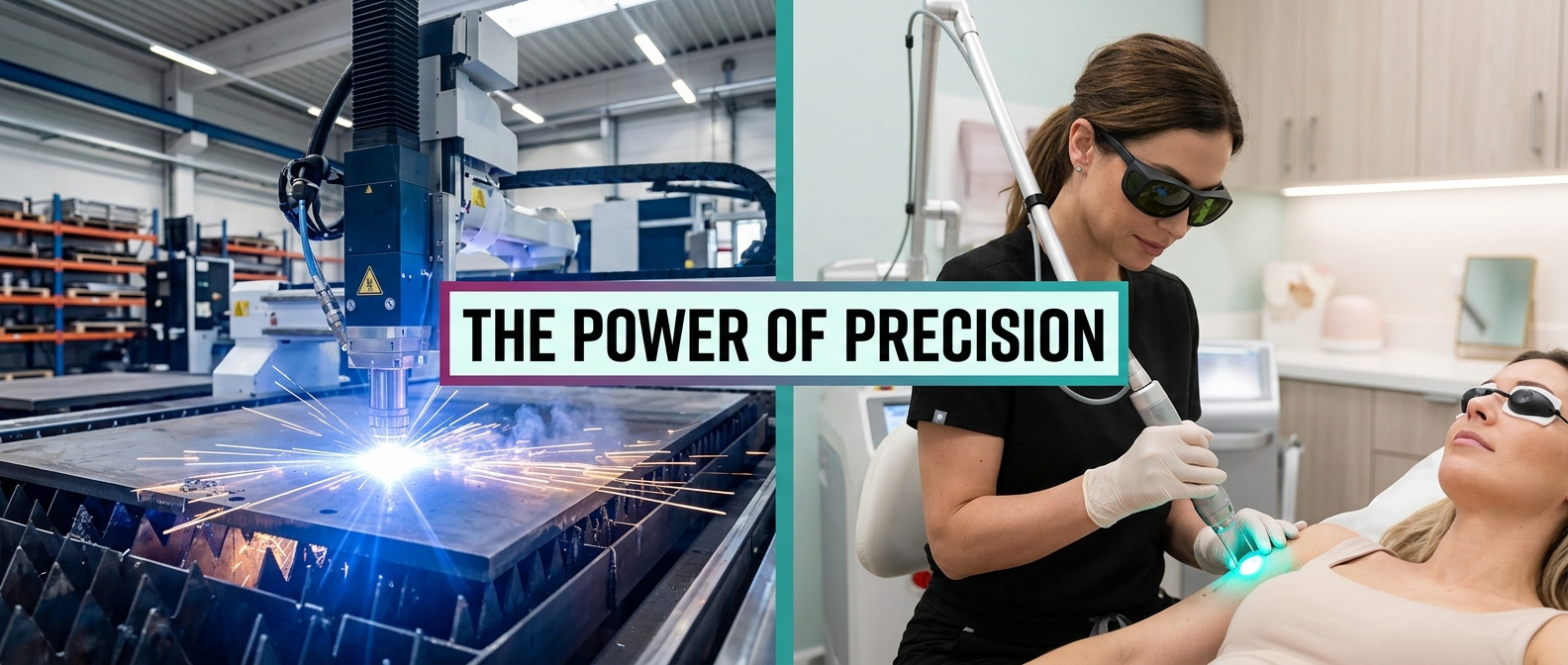
A single beam of light, focused with enough intensity, can slice through steel or reshape human tissue with pinpoint accuracy. That's not science fiction anymore. It's the everyday reality of high-power laser technology, and it's quietly transforming two very different industries at once: manufacturing and healthcare. If you've noticed sharper product edges, faster production lines, or less invasive medical procedures lately, a laser was probably involved.
The Problem With Traditional Tools
For decades, manufacturers relied on mechanical cutting, stamping, and drilling. These methods work, but they come with baggage.
- Physical tools wear down and need constant replacement.
- Mechanical stress can warp or damage delicate materials.
- Precision is limited by the tool's own physical dimensions.
- Slower changeovers between different job specifications.
Healthcare faced a parallel struggle. Traditional scalpels and invasive surgical tools meant longer recovery times, higher infection risks, and more scarring. Patients wanted better outcomes. Providers wanted more control. Neither side had a great answer until lasers entered the picture.
Why Old Methods Are Losing Ground
The agitation here is simple: businesses and clinics that stick with outdated tools are falling behind. Competitors using laser-based systems are producing more with less waste. Hospitals adopting laser procedures are seeing shorter patient stays and fewer complications.
It's not just about speed. It's about margins. Every second a production line sits idle, or every extra day a patient spends recovering, translates into real cost. Businesses that fail to modernize often absorb these costs quietly, until they can't anymore.
How High-Power Lasers Actually Work
At their core, high-power lasers concentrate light energy into an extremely narrow, intense beam. This beam can be tuned for different purposes depending on the material or tissue involved.
- Cutting: The laser melts, burns, or vaporizes material along a precise path.
- Welding: Intense heat fuses materials together with minimal distortion.
- Engraving: Controlled bursts mark surfaces without physical contact.
- Surgical use: Focused energy targets tissue with minimal damage to surrounding areas.
Because there's no physical blade touching the material or patient, wear and tear practically disappear. That means consistent results, run after run, procedure after procedure.
Manufacturing: Where Precision Meets Speed
In factories, high-power lasers are reshaping entire production workflows. Automotive plants use them to cut and weld components with tolerances that mechanical tools simply can't match. Electronics manufacturers rely on lasers for micro-drilling circuit boards, where even a fraction-of-a-millimeter error can ruin a product.
Metal fabrication shops have shifted heavily toward laser cutting because it reduces material waste. The beam's narrow kerf means less scrap metal, which adds up to real savings over thousands of units.
Speed matters too. A laser cutting system can often complete a job in a fraction of the time a mechanical press would take, all while maintaining tighter tolerances.
Healthcare: Less Invasive, More Effective
In medicine, lasers have opened doors that used to be closed. Laser eye surgery has become common enough that most people know someone who's had it. But the applications go much further.
- Dermatology clinics use lasers for skin resurfacing and scar reduction.
- Dentists use laser tools for gum reshaping and cavity treatment.
- Surgeons use laser-assisted techniques for procedures that once required larger incisions.
- Oncology treatments increasingly incorporate laser-based tools for precision tumor targeting.
Patients benefit through shorter recovery windows, reduced scarring, and fewer complications compared to older techniques. That's a meaningful shift for anyone who's dreaded going under a traditional scalpel.
Real-World Adoption Is Accelerating
Industry professionals note that the appeal isn't just the technology itself, it's the return on investment. A shop that switches to laser cutting often sees reduced labor costs, less material waste, and faster turnaround on client orders. A clinic that adds laser-based treatments often attracts more patients simply because the procedures sound, and are, less intimidating.
Word spreads quickly in both industries. Once one facility upgrades and reports better output or better patient satisfaction, competitors take notice.
What to Consider Before Adopting Laser Technology
Not every laser system fits every need. Power output, wavelength, and beam quality all vary based on application.
- Determine the primary use case, whether it's cutting, welding, engraving, or a medical procedure.
- Understand the material or tissue type involved, since different lasers suit different densities and compositions.
- Factor in maintenance requirements and operator training.
- Compare energy efficiency across different laser classes.
- Review safety certifications, especially for medical-grade equipment.
These decisions aren't one-size-fits-all. What works for a large-scale automotive plant won't necessarily suit a small dermatology practice, and vice versa.
Why Location and Budget Change Everything
Here's the part that matters most if you're actually considering this for your business or your own healthcare needs: the best high-power laser solutions depend heavily on your specific region, provider availability, and budget range.
Pricing for industrial laser systems can vary dramatically based on power output and supplier. Medical laser treatments, similarly, differ widely depending on the clinic, the technology used, and local market rates. What's available and affordable in one city might be completely different just a few hours away.
That's why generic advice can only take you so far. The right next step is looking into providers, systems, and treatment options that match your exact situation, whether that means industrial-grade cutting equipment for a production facility or laser-based treatment options at a nearby clinic.
Moving Forward
High-power lasers aren't a passing trend. They represent a fundamental shift in how precision work gets done, whether that's shaping metal or treating patients. The technology continues to evolve, and staying informed about current systems, providers, and pricing structures is the smartest way to make a confident decision.
If this overview sparked your curiosity, it's worth digging deeper into the specific options available in your area. The right laser solution is out there. It just takes a bit more searching to find the one that fits your needs best.