
New Sciatica Shots: What Patients Need to Know in 2026
If you've been living with sciatica pain - that sharp, radiating ache that shoots from your lower back down through one leg - you already know how much it can disrupt daily life. The good news is that the world of sciatica injections has changed significantly. New formulations, smarter delivery methods, and non-steroid alternatives are giving patients more options than ever before. This guide breaks down what's new, what's different, and what questions are worth asking your pain specialist.
Why Traditional Steroid Shots Have Limitations
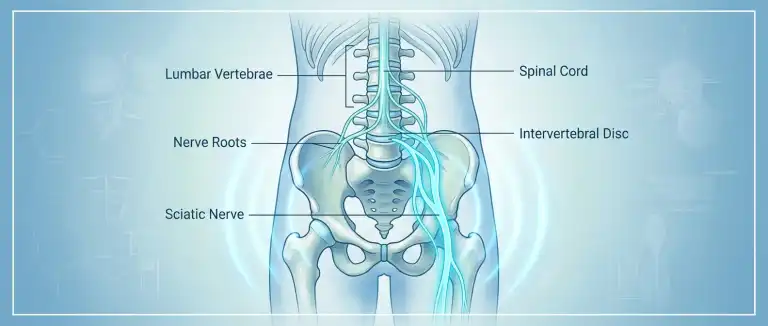
For decades, epidural steroid injections (ESIs) were the go-to option for severe sciatica. They work by delivering anti-inflammatory medication directly to the irritated nerve root. However, traditional ESIs have long been used "off-label," meaning they were never specifically FDA-approved for this purpose.
Many conventional formulations contain preservatives and particulate matter - tiny particles that, in rare cases, can cause serious complications if they block a blood vessel near the spine. This has driven researchers and pharmaceutical companies to develop cleaner, safer, and more targeted alternatives.
 A New Generation of Sciatica Injections
The most talked-about development in 2026 is SEMDEXA™ (SP-102), a novel gel formulation of dexamethasone developed by Semnur Pharmaceuticals. Unlike traditional epidural steroids, SEMDEXA is completely free of preservatives, surfactants, and particulate matter.
Here's why that matters:
- The absence of particulates removes the risk of vessel blockage.
- The gel consistency keeps the medication at the inflamed nerve site longer.
- It is designed to be the first FDA-indicated epidural steroid specifically for sciatica, rather than an off-label use.
SEMDEXA has received FDA Fast Track status and has been advancing through Phase 3 clinical trials, with enrollment completing through 2025-2026. For patients and doctors alike, this represents a meaningful shift in how sciatica injections are approved and administered.
Non-Steroid Options Are Advancing Rapidly
Not everyone is a candidate for steroid-based treatment. Some patients have diabetes, where steroids can temporarily raise blood sugar, while others simply want to avoid steroids altogether.
Enter STX-015, an investigational injection of clonidine micropellets developed by Sollis Therapeutics. Clonidine works by blocking pain signals at the nerve level - without steroids or opioids. It is currently in Phase III clinical trials and represents one of the most promising non-steroidal options in the pipeline for sciatica sufferers.
Combining Injections With Nerve-Calming Technology
One of the most impactful trends in pain management is combining injections with Pulsed Radiofrequency (PRF) - a minimally invasive technique that uses high-frequency energy pulses to calm overactive nerve signals.
Recent clinical trials have shown that pairing PRF with a transforaminal epidural steroid injection can deliver significantly longer-lasting pain relief than a steroid injection alone - in some cases lasting up to a year or more. Pain specialists are increasingly offering this combination as a preferred approach for chronic sciatica cases.
How AI Is Changing the Way Doctors Give Injections
Precision is the new standard. In 2026, leading pain clinics are using:
- Real-time imaging guidance (CT, fluoroscopy, or ultrasound) to place injections at the exact millimeter of nerve inflammation.
- AI-based predictive models that analyze a patient's MRI data, clinical history, and even psychological factors to predict how well that specific person will respond to a specific type of injection - before the procedure even begins.
This means fewer "trial and error" treatments and a more personalized approach to pain management from the start.
Regenerative Options: Still Emerging, But Promising
Beyond managing inflammation, some researchers are now targeting the root cause of most sciatica cases: a herniated or degenerated spinal disc pressing on the nerve. Several approaches are under active investigation:
- Platelet-Rich Plasma (PRP) injections use a patient's own concentrated platelets to promote healing at the nerve root - an approach being directly compared to steroids in clinical trials.
- Cell-based disc therapies, including investigational treatments being studied at major research institutions like UCSF, aim to regenerate damaged disc tissue rather than simply reduce pain signals.
While these options are not yet standard care, they signal where sciatica treatment is headed over the next several years.
Key Questions to Ask Your Pain Specialist
If you're considering injection therapy for sciatica, these questions can help you make a more informed decision during your next appointment:
- "Are you using particulate or non-particulate steroids for my epidural - and what's the difference for my case?"
- "Is SEMDEXA available, or are there active clinical trials I might qualify for?"
- "Would combining my injection with Pulsed Radiofrequency (PRF) make sense for my level of pain?"
- "Am I a candidate for PRP or other regenerative options?"
Finding the Right Treatment for Your Specific Situation
The landscape of sciatica injections is no longer one-size-fits-all. The right approach depends on the cause of your sciatica, your overall health profile, your history with prior treatments, and what's available in your area. A board-certified pain management specialist can help you navigate these options and determine which type of injection - or combination of treatments - is most appropriate for your case.
The best way to find the most relevant, up-to-date information on sciatica injection treatments, local specialists, and available procedures is to search for specific terms related to your condition and location. Exploring searches around sciatica treatment types, epidural injection options, and pain management specialists near you can help point you toward the answers that are most relevant to your personal situation.