
Why Pay Only For The Miles You Actually Drive?
Why Pay Only For The Miles You Actually Drive?
Your car sits on the driveway five days a week. Yet your insurance renewal just landed, and the price has gone up again. Sound familiar? Across the UK, millions of drivers are quietly overpaying for cover they barely use, simply because traditional insurance was never built with low-mileage motorists in mind. There's a growing alternative, and it's changing how people think about car cover entirely.
The Problem With "One Price Fits All" Insurance
Standard car insurance charges you a flat annual premium. It doesn't matter if you drive 3,000 miles a year or 15,000. The insurer estimates your risk based on broad assumptions, then bills you the same whether your car is constantly on the motorway or parked outside your house most of the month.
For remote workers, retirees, students, and second-car owners, this model rarely feels fair. You're effectively subsidising drivers who rack up far more miles, and far more risk, than you ever will.
Why This Is Becoming a Bigger Issue Now
Driving habits have shifted dramatically in recent years. Hybrid working means fewer daily commutes. More households run a second car that mostly stays parked. Yet insurance pricing models have been slow to catch up, leaving a widening gap between what people actually drive and what they're charged for.
This mismatch is exactly why low-mileage drivers are increasingly searching for alternatives that reflect their real usage, rather than accepting a generic annual quote.
How Pay-Per-Mile Insurance Actually Works
Instead of one flat fee, pay-per-mile policies split your cost into two simple parts:
- A fixed base rate that covers your car while it's parked, protecting against theft, fire, or damage even when you're not driving.
- A small per-mile charge billed monthly, based on the exact distance you've driven.
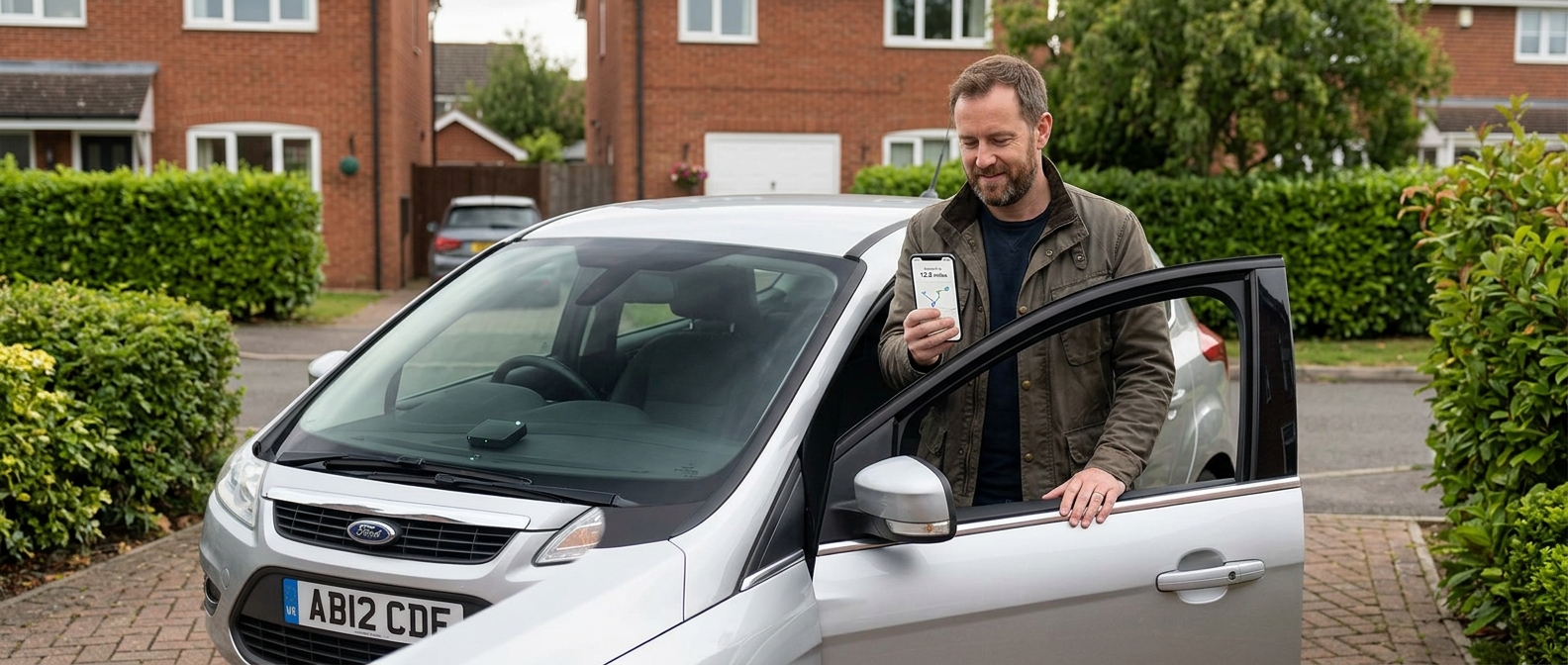
Most providers track mileage through a small plug-in device fitted to your car, or in some cases through your vehicle's own built-in connected software if it's a newer model. You can check your journeys and running costs through an app at any time.
It's Not the Same as a Black Box Policy
This is a common point of confusion. Traditional black box insurance monitors your driving behaviour, your speed, braking, cornering, and even what time of day you're on the road. Pay-per-mile cover typically does none of that.
It only tracks distance. That means no curfews, no penalties for a heavy brake, and no judgment on your driving style. You're simply charged for how far you've gone, not how you got there.
What Happens on a Long Road Trip?
A common worry is getting hit with a huge bill after an unexpected long drive or a holiday road trip. Most providers solve this with a daily mileage cap. Once you pass a certain number of miles in a single day, often around 150, any additional miles that day are free. This protects you from one big trip blowing your monthly budget.
Who Actually Benefits Most?
This model doesn't suit everyone, and that's the point. It's designed for a specific type of driver:
- Hybrid or remote workers who no longer commute daily
- Retirees using their car mainly for errands or weekend trips
- Students who leave their car parked at home during term time
- Households with a second car that rarely leaves the drive
If you drive significantly less than the national average, this pricing structure can mean paying for weeks of near-zero usage at a fraction of the usual cost.
The Trade-Offs Worth Knowing
It's not automatically the cheaper option for everyone. A few things to weigh up:
- Your monthly bill will fluctuate depending on how much you drive, which can make budgeting slightly less predictable.
- If your circumstances change, a new job with a long commute, for example, this type of policy can quickly become more expensive than a standard annual one.
- Not every insurer offers it, so availability and pricing structures vary noticeably between providers.
Why Location and Provider Comparison Matters So Much
Here's where things get genuinely specific to you. Base rates, per-mile charges, daily mileage caps, and even device requirements differ significantly between providers and regions across the UK. A rate that looks like a bargain for someone in one postcode might be entirely different for a driver just a few miles away, depending on local risk factors and provider coverage in that area.
The only way to know whether this type of cover actually saves you money is to compare current quotes based on your own mileage, location, and vehicle. General advice can only take you so far. Your specific numbers, your annual mileage estimate, your postcode, your car's value, are what actually determine whether switching makes financial sense.
What To Check Before You Switch
Before comparing quotes, it helps to have a few details ready:
- Your realistic annual mileage estimate, based on recent driving habits
- Whether your car is compatible with a plug-in tracker or connected software
- Your typical driving patterns, including any regular long trips
- Your current annual premium, so you have a clear baseline to compare against
Having these figures ready makes it much easier to see, side by side, whether a pay-per-mile structure genuinely beats what you're paying now.
Where This Leaves You
Pay-per-mile insurance isn't a gimmick. It reflects a simple, fair idea: if you barely drive, you shouldn't pay like someone who drives every day. But whether it actually saves you money depends entirely on your own mileage, location, and driving habits, figures that vary from person to person and postcode to postcode.
If your car spends more time parked than on the road, it may be worth exploring how this pricing model compares with what you're currently paying, and what it could look like based on your own driving profile.