
Golf Cart Auctions: How Police Impound Sales Score Big Deals
Ever scrolled past a golf cart online and choked on the price tag? You're not alone. Retail golf carts now regularly sell for $8,000 to $15,000, even for basic models. But there's a quiet corner of the resale market where the same carts show up for a fraction of that cost: police impound and municipal auctions. These sales rarely get advertised, yet they happen almost every week in counties across the country. The question isn't whether these deals exist. It's whether you know where to look.
The Hidden Market Nobody Talks About
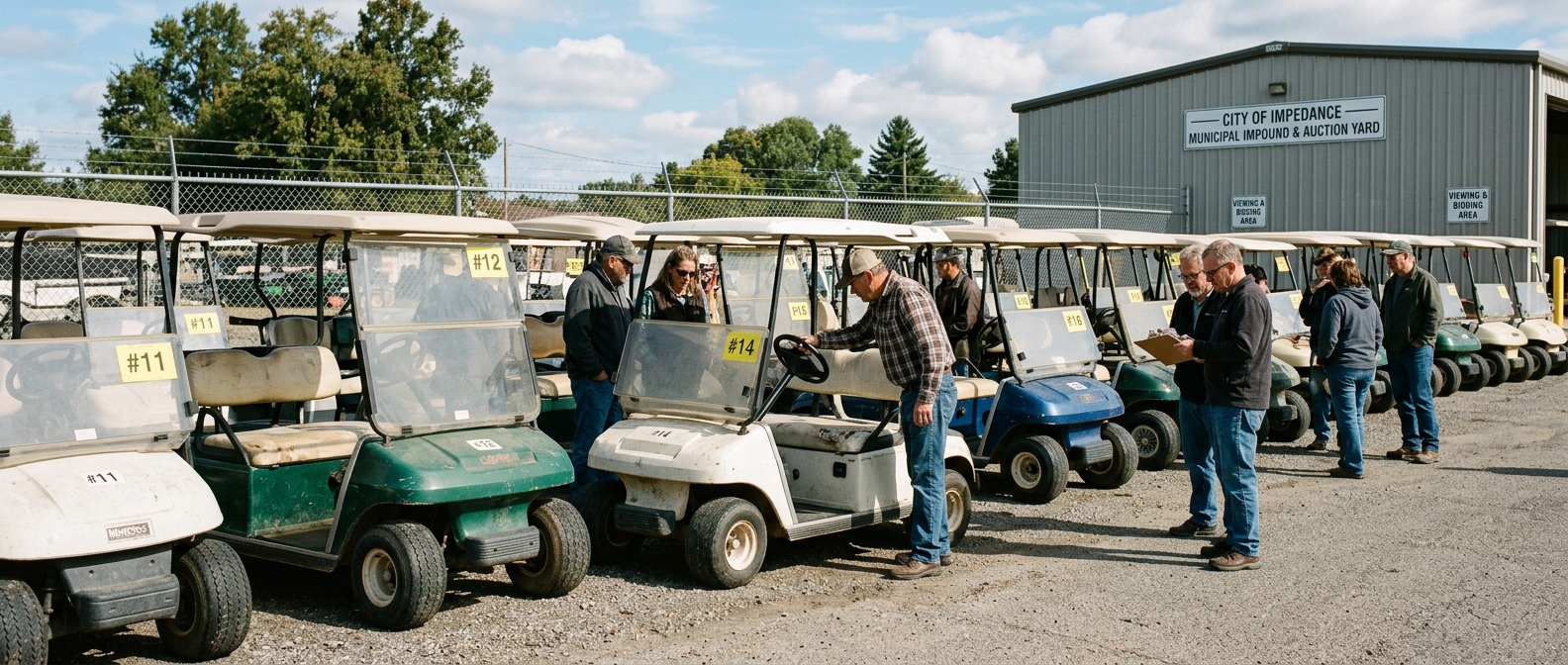
Every year, thousands of golf carts end up in police custody. Some are abandoned in neighborhoods. Others are seized during code enforcement sweeps in gated communities or retirement parks. A portion come from repossessions tied to unpaid loans. Once a cart sits unclaimed long enough, it becomes property of the municipality, and eventually, it gets auctioned off.
Unlike car auctions, which have become saturated with dealers and flippers, golf cart auctions still fly under the radar. Fewer bidders means less competition, which means prices often stay low.
Why Traditional Buying Methods Are Failing You
Most people default to dealership lots or online marketplaces. Both come with markups.
Dealerships add margin for reconditioning, warranty, and floor space. Private sellers on marketplace apps often overprice carts based on emotional attachment rather than actual value. Meanwhile, impound auctions operate on a simple principle: the municipality wants the item gone, not maximized profit.
That difference alone explains why identical cart models can sell for wildly different prices depending on where you buy.
How Impound Auctions Actually Work
The process is more structured than most people expect.
- Local police departments or sheriff's offices hold unclaimed or seized property, including golf carts.
- After a legally required holding period, items move to auction status.
- Auctions are run either in-person at municipal lots or through certified online auction platforms contracted by the city or county.
- Listings typically include basic details: make, model, condition notes, and sometimes photos.
- Bidding is open to the public, often with no dealer license required.
Some counties bundle golf carts with other seized vehicles, while others run dedicated small-vehicle auctions a few times a year.
What Buyers Should Actually Expect
These aren't showroom carts. Expect variation.
- Some carts are barely used, seized shortly after purchase disputes or loan defaults.
- Others sat outdoors for months and need battery replacement or minor repairs.
- Electric models are common, though gas-powered carts appear too, depending on the region.
- Most auctions sell "as-is," so a basic mechanical check before bidding matters.
Buyers who understand this going in tend to walk away satisfied. Those expecting dealership-level polish sometimes don't.
Tips That Separate Smart Bidders From Impulsive Ones
A few habits consistently lead to better outcomes:
- Check listings a few days before the auction date, not the morning of.
- Look at multiple counties, not just your own. Some regions have far less bidder competition.
- Set a hard price ceiling before bidding starts.
- Ask if in-person inspection is allowed beforehand.
- Confirm whether payment must be immediate or within a short window.
Bidders who treat this like a casual purchase often overpay. Those who treat it like research-based buying tend to win better deals.
The Real Reason This Market Stays Quiet
Municipalities aren't in the marketing business. They don't run ad campaigns for auctions. Most listings live on government websites, auction platform portals, or local legal notice boards; places most people never think to check.
That's the real barrier. It's not availability. It's visibility.
Once you know these auctions exist in nearly every state, the next challenge becomes practical: finding which counties near you are running one soon, what platforms they use, and how their bidding rules differ.
While these tips help you understand the opportunity, the best deals ultimately depend on your specific location, upcoming auction dates, and local seller rules. Auction schedules vary by county, and platforms differ between regions. If you're serious about finding a real listing near you, it's worth looking into local police auction directories, county surplus property sites, and certified auction platforms that specialize in seized vehicles.
Some regions post auctions monthly. Others only a few times a year. Knowing your area's pattern makes a measurable difference.
Final Thoughts
Golf cart impound auctions aren't a secret loophole, but they are underused. For buyers willing to do a little homework, they represent one of the more overlooked ways to buy a cart well below typical retail price. The information is public. The auctions are real. The only step left is finding the listings relevant to your area and understanding how each auction operates before you bid.