
Police Impound RVs: What Nobody Tells You About Buying One
Police Impound RVs: What Nobody Tells You About Buying One
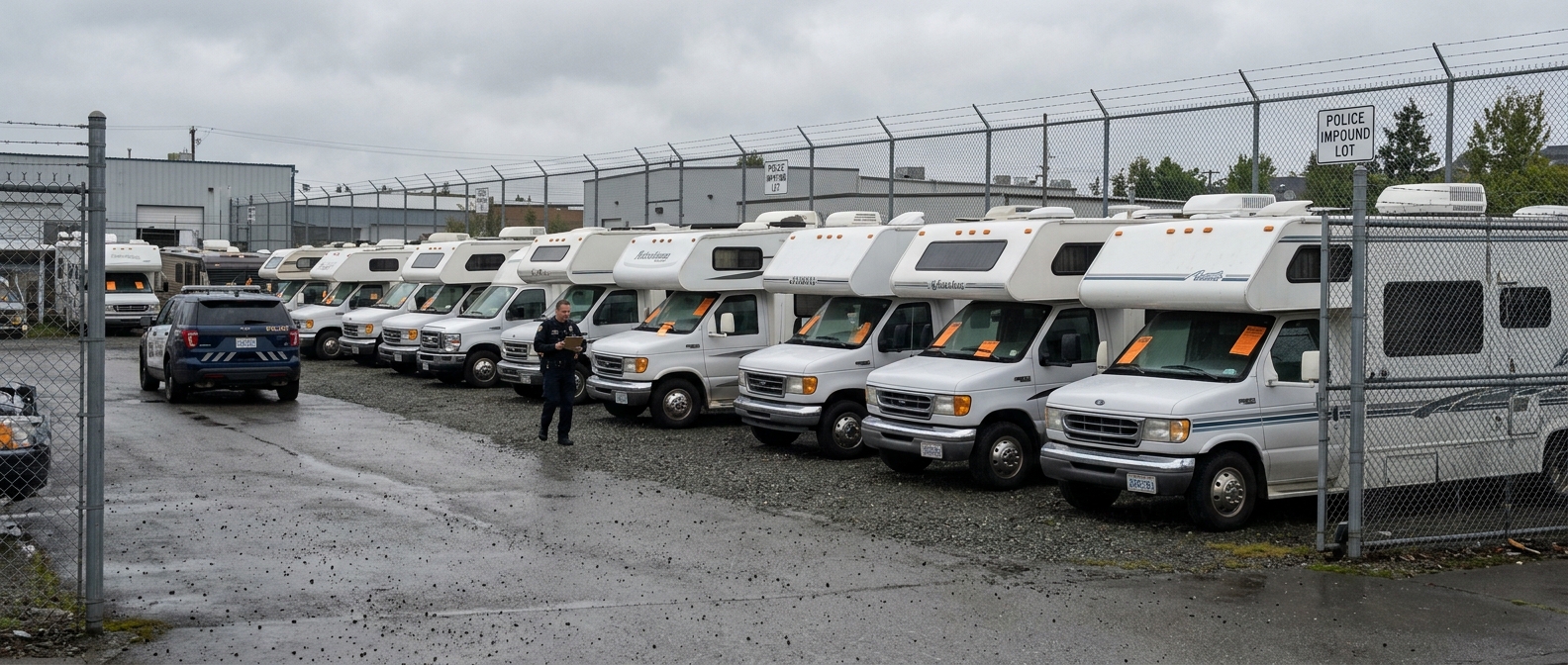
Somewhere in your city, a lot sits behind a chain-link fence, packed with motorhomes and travel trailers nobody came back for. Police impound RVs get seized for unpaid loans, abandoned registrations, or criminal investigations. Most people scroll past these listings, assuming they're too complicated or too risky to touch. But every week, some of these vehicles quietly sell for a fraction of what you'd pay a dealer. The catch? You need to know where to look and what you're actually buying.
Why RVs End Up Behind the Fence
Recreational vehicles get impounded for surprisingly ordinary reasons. An owner stops making loan payments and the lender repossesses through law enforcement channels. A registration lapses and the vehicle gets towed from a public street. Sometimes an RV is evidence in a legal case and sits untouched for months. In every scenario, storage costs pile up fast, and municipalities want these vehicles gone. That urgency is exactly why prices drop so low compared to a dealership lot.
The Old Way of Buying Doesn't Work Here
Most people shop for RVs the traditional way: visit a dealership, negotiate a price, drive off the lot. That approach fails completely with impound inventory. These vehicles aren't advertised on dealership websites or featured in glossy brochures. They move through auctions, municipal surplus sales, and lien-sale notices that rarely get promoted outside a local newspaper listing or a government bulletin board. If you're waiting for an impound RV to show up on a mainstream shopping site, you'll wait forever.
How the Auction Process Actually Works
Impounded RVs typically move through one of three channels:
- Police or sheriff auctions - vehicles seized during investigations or repeated code violations get sold to the public, often through a licensed auctioneer.
- Lien sales - towing companies or storage facilities that hold an RV long enough can legally auction it to recover unpaid fees.
- Municipal surplus sales - some cities bundle abandoned vehicles into scheduled public sales, sometimes online, sometimes in person.
Each channel has its own rules about deposits, payment timing, and whether you can inspect the vehicle beforehand.
What You Won't Get: A Warranty
This is the part that trips people up. Impound and auction vehicles almost always sell "as-is." There's no test drive, no dealer inspection report, and often no guarantee the engine even starts. Some lots allow a brief walk-around before bidding; others don't let you inside the vehicle at all. That's a real risk, and it's why savvy buyers budget extra for repairs, even on a unit that looks clean in photos.
Red Flags Every Buyer Should Check
Before bidding on any impounded RV, experienced buyers look for:
- Water damage around windows, roof seams, and the undercarriage
- Signs of long-term storage, like flat tires or rodent damage
- A clear title history, since liens or unresolved loans can complicate ownership transfer
- Odometer and engine hours, when accessible, to gauge real usage
Skipping this checklist is how a "bargain" turns into a money pit.
Why Location Changes Everything
Impound auction rules vary enormously depending on where you live. Some states require public notice periods before a sale; others move much faster. Some municipalities post listings online weeks in advance, while smaller counties still rely on physical bulletin boards or word of mouth through local towing companies. The type of RV available also shifts by region - coastal areas tend to have more travel trailers seized from storage lot disputes, while inland areas see more motorhomes tied to loan defaults.
The Search Intent Pivot
Reading about the process is one thing. Finding an actual impound auction near you is another. The best deals rarely stay listed for long, and the sales calendar differs from county to county. If you're seriously considering this route, the next logical step is looking into local police impound auction schedules, lien sale notices in your state, and government surplus vehicle listings for your specific area. That's where the real pricing, dates, and inventory details live - not in a general overview like this one.
A Realistic Way to Start
Buying a police impound RV isn't a shortcut for everyone. It suits buyers who can inspect a vehicle critically, handle a bit of uncertainty, and don't mind doing extra homework before bidding. For the right buyer, though, it's one of the few ways to get into an RV at a price that a dealership simply can't match. The opportunity is real, but so is the need to look closely before you commit.
If this sounds like a route worth exploring, the next step is finding out what's actually listed near you, since availability and rules shift constantly by location.