
Police Impound Smartphones: The Auctions Nobody Talks About
Police Impound Smartphones: The Auctions Nobody Talks About
Every week, police departments across the country add more items to a growing pile of unclaimed property. Lost phones, seized devices from investigations, and evidence that's no longer needed all end up in the same place: storage. Eventually, that storage overflows. And when it does, departments turn to a surprisingly simple solution - public auctions. Most people scroll past this fact without realizing it applies to something they use every single day. Smartphones.
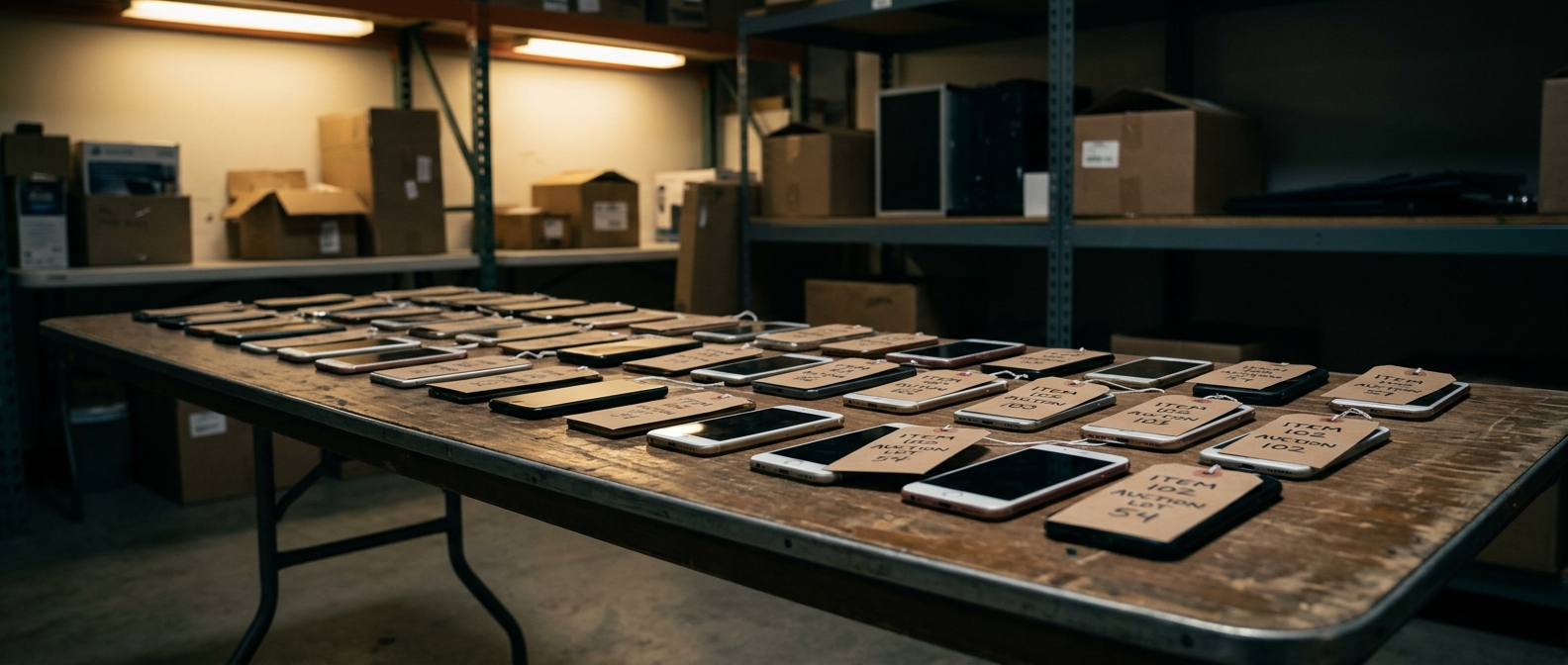
Where Do These Phones Actually Come From?
It's not as mysterious as it sounds. Police departments accumulate devices through a few common channels:
- Lost or found property that's never claimed within the legal holding period
- Devices seized during arrests that are no longer needed as evidence
- Items confiscated during traffic stops or investigations
- Abandoned property recovered from vehicles or public spaces
Once a device sits unclaimed past a certain point, usually 30 to 90 days depending on local law, it becomes eligible for release. Departments don't have the budget or space to store these items indefinitely. So they move on.
Why Auctions Instead of Just Throwing Them Away
Destroying usable electronics doesn't make financial sense for a public agency. Auctions let municipalities recover some value from unclaimed property, and that money typically goes back into local government funds. It's a practical solution to a logistical problem, not some hidden bargain bin. But because most of these sales are handled through smaller online platforms or local auction houses, they rarely get mainstream attention.
Why Traditional Retail Feels Broken by Comparison
Anyone who's shopped for a new phone recently knows the frustration. Flagship prices keep climbing. Carrier contracts lock you into long-term plans. Even "budget" phones can feel overpriced for what you get. This is part of why alternative markets, including auctions, refurbished marketplaces, and trade-in programs, have grown steadily over the past few years. People are simply looking for other ways in.
What You Won't Find in a Glossy Ad
These auctions aren't polished. There's no marketing campaign, no influencer unboxing video. Listings are often plain, sometimes vague on details like model number or condition. That's part of the appeal for some buyers, and part of the risk for others. A few things to understand before considering this route:
- Devices are typically sold "as-is," with no warranty or guarantee
- Some phones may be locked to a carrier or require account verification
- Condition varies wildly, from barely-used to heavily damaged
- Not every auction is run the same way, some are government-managed, others are third-party contractors
How the Process Typically Works
Most municipalities don't run these auctions themselves. Instead, they contract with established auction platforms that specialize in government surplus and unclaimed property. These platforms handle the listing, bidding, and payment processing. Buyers create an account, browse available inventory, and place bids within a set window. Some auctions run for just a few hours. Others stay open for days.
Pickup or shipping policies vary too. Some require local pickup within a specific timeframe. Others ship nationwide. It's worth reading the fine print carefully, since return policies are often limited or nonexistent.
Is It Worth the Risk?
That depends entirely on what you're comfortable with. For some buyers, the appeal is purely financial, a chance to get a functional device for a fraction of retail. For others, it's more about the novelty of the process itself. Either way, going in with realistic expectations matters more than anything else. This isn't a guaranteed deal. It's a bidding process with real uncertainty attached.
Where Search Comes In
Here's the part most articles skip. Auction availability isn't national or centralized. It's local. What's listed in one city's surplus auction has nothing to do with what's available three states over. Timing matters too, since new inventory gets added on a rolling basis and older listings close fast. If this kind of sale sounds interesting, the more useful next step isn't reading another general overview. It's looking into what's actually active near you right now. Local police departments, municipal surplus sites, and regional auction platforms each operate independently, and availability shifts constantly. The specifics, what's listed, when it closes, how to bid, all depend on where you're searching from.
A Few Final Things to Keep in Mind
Before diving in, it helps to set a budget and stick to it. Auction dynamics can get competitive fast, and it's easy to bid past what a device is actually worth. It's also smart to research the specific auction platform beforehand. Some have stronger reputations than others when it comes to accurate listings and fair processes.
This isn't a mainstream shopping method, and it won't be the right fit for everyone. But for those curious about how unclaimed property actually moves through the system, it's a legitimate, often overlooked corner of the secondhand electronics world. Understanding how these auctions work is one thing. Knowing what's currently listed in your area is a different question entirely, and one worth exploring further if you're genuinely curious.