
Read About AI Dress Brand Monitoring
Read About AI Dress Brand Monitoring
Somewhere on the internet right now, someone might be selling a cheap copy of your favorite dress brand. Or worse, a company you trust might be using your designs without permission. In 2026, fashion brands are turning to artificial intelligence to catch these problems before they spiral out of control. This shift isn't just corporate paranoia. It's a response to a marketplace that moves faster than any human team can track.
The Problem: A Marketplace Too Big to Watch
Every minute, thousands of new listings appear across online marketplaces, social media shops, and resale platforms. A dress design that took months to develop can be copied and sold within days.
Traditional brand protection relied on customer complaints or occasional manual searches. That method worked when commerce moved slowly. It doesn't work anymore.
Fashion brands now face:
- Counterfeit listings across dozens of platforms simultaneously
- Unauthorized resellers undercutting official pricing
- Knockoff designs appearing before the original even ships
- Fake "official store" pages on social media
Without constant surveillance, brands lose revenue, control, and customer trust before they even realize there's an issue.
Why Manual Monitoring Falls Short
Hiring a team to manually search for infringements sounds reasonable until you consider the scale. A single popular dress style can appear under hundreds of different product names, translated into multiple languages, and hosted on marketplaces most consumers have never heard of.
Human reviewers get tired. They miss patterns. They can't work around the clock across every time zone where counterfeiters operate.
This is exactly the gap that automated monitoring tools were built to fill.
How AI Monitoring Actually Works
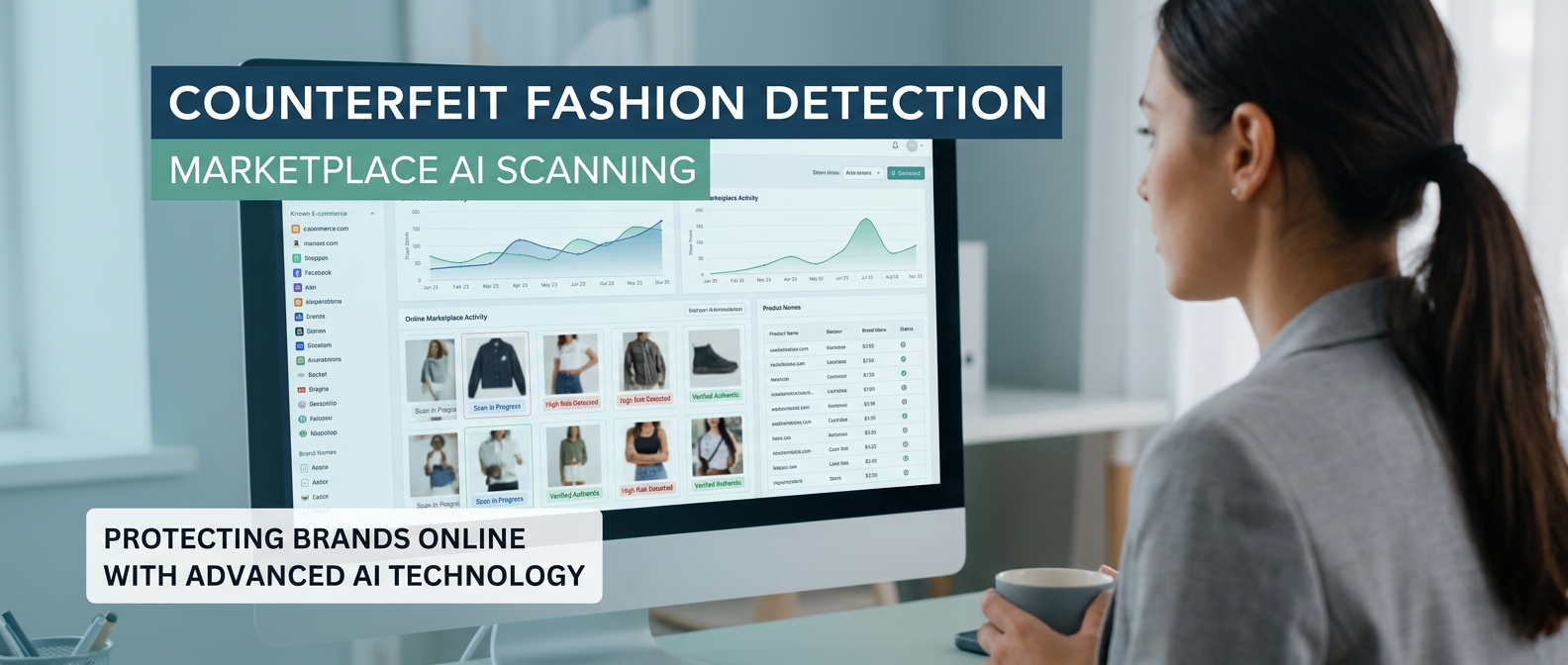
AI-driven brand monitoring systems scan the web continuously, comparing new listings against a brand's registered designs, logos, and product photos. Here's a simplified breakdown of the process:
- Image recognition: The system compares uploaded product photos against a brand's original catalog to spot visual matches, even when a counterfeiter alters colors or angles.
- Text pattern analysis: Algorithms flag listings using brand names, misspelled variations, or suspicious keyword combinations.
- Marketplace scanning: The software checks major platforms, smaller resale sites, and social media storefronts in near real time.
- Alert generation: When a likely infringement is found, the system notifies the brand's team for review and potential takedown action.
This process, once impossible to do at scale, now runs quietly in the background for many mid-size and large fashion labels.
What Makes a Monitoring Tool Actually Useful
Not all monitoring platforms are built the same. Brands evaluating these tools tend to look at a few key factors:
- Coverage breadth: Does it scan international marketplaces, not just domestic ones?
- Update frequency: Is scanning continuous, or does it run on a delay?
- False positive rate: Does the system flag too many legitimate resellers by mistake?
- Takedown support: Does the provider help file complaints, or just send alerts?
A tool that only checks once a week offers little advantage over manual searching. The value comes from speed and consistency.
Small Brands Face the Same Risks
It's easy to assume counterfeiting only targets luxury labels. In reality, independent and mid-size dress brands are frequently targeted precisely because they have fewer resources to fight back.
A small designer who builds a following on social media can find their exact product photos reused by a dropshipping site within weeks. Without monitoring in place, they may never know until a customer complains about receiving a low-quality knockoff.
This is why brand protection is no longer viewed as an expense reserved for major fashion houses. It's increasingly treated as a basic operational cost, similar to insurance.
The Search Intent Pivot
Reading about how monitoring works is one thing. Choosing the right approach for your specific brand size, budget, and risk level is another. The right solution depends heavily on factors like how many marketplaces you sell on, whether you operate internationally, and how much design-heavy inventory you carry each season.
Brand owners researching this topic often start comparing specific monitoring services, pricing tiers, and coverage options to figure out what actually fits their situation. Since offerings vary widely by scale, industry focus, and geographic reach, it's worth looking into current options available for dress and apparel brands specifically.
Final Thoughts
AI-driven monitoring has changed what's possible for brand protection in fashion. What once required an impossible amount of manual labor now happens continuously and automatically. Still, every brand's situation is different, and understanding the available tools is the first step toward making an informed decision.
If this topic is relevant to your business, it may be worth exploring further to see which monitoring approach aligns with your specific needs.