
Transform Your Garage: The Ultimate Flooring Options Guide
Your garage deserves better than a cold, stained concrete slab. Whether you're tired of oil spots ruining your floor or simply want to create a space that feels more finished and professional, choosing the right flooring can completely transform how you use and enjoy your garage. The good news is that today's garage flooring options offer something for every budget, style preference, and functional need.
Why Standard Concrete Floors Fall Short
Most homeowners accept their bare concrete garage floor as a necessary evil, but this outdated approach comes with real drawbacks. Concrete is porous, which means it absorbs oil, chemicals, and stains that become nearly impossible to remove. It also creates dust over time as the surface deteriorates, leading to a mess that constantly migrates into your home. During winter months, bare concrete becomes dangerously slippery when wet, and it offers zero insulation value, making your garage uncomfortably cold. Perhaps most importantly, an untreated concrete floor significantly diminishes your home's overall appearance and can even impact resale value.
Epoxy Coatings: The Professional's Choice
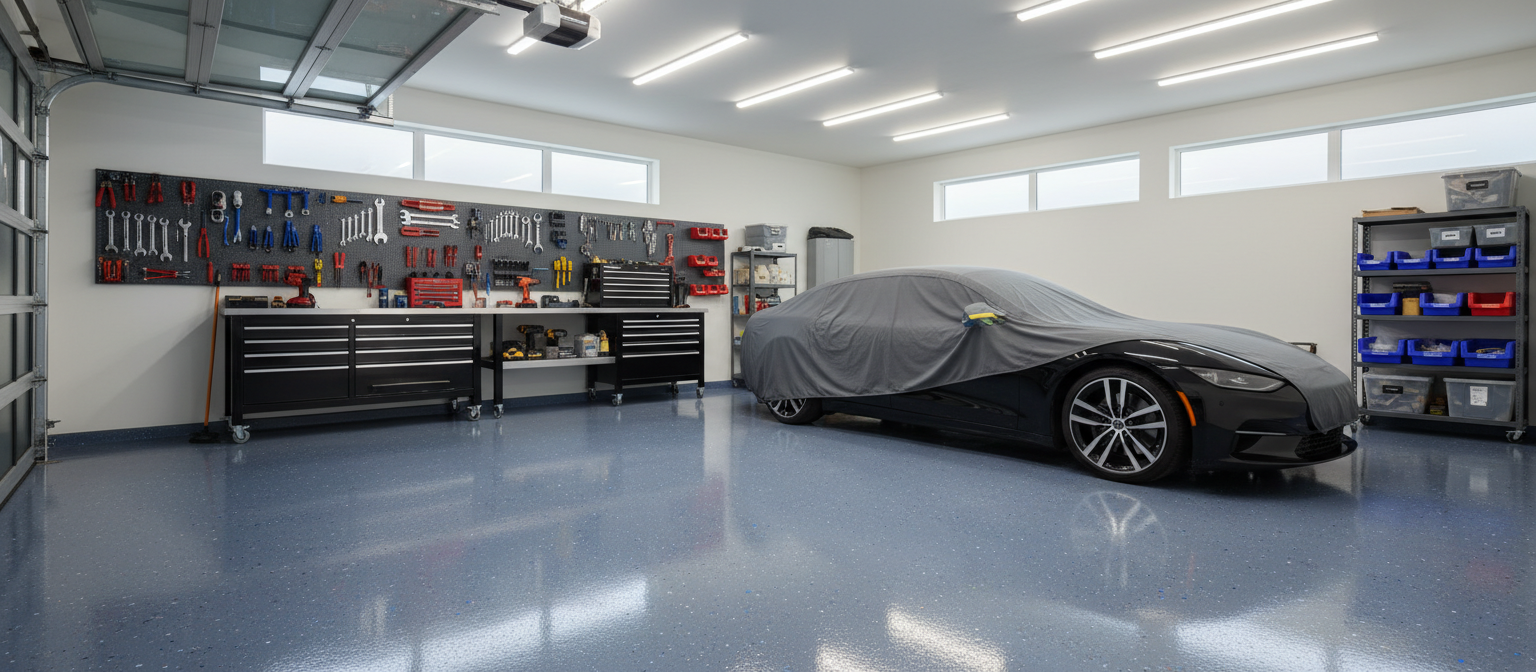
Epoxy flooring has become the gold standard for garage transformations, and for good reason. This durable coating creates a chemical bond with your concrete, forming a seamless, high-gloss surface that resists stains, impacts, and chemicals with ease. The installation process involves thorough floor preparation followed by multiple layers of epoxy resin, often mixed with decorative color flakes for added texture and visual appeal. While professional installation typically costs between $3 to $12 per square foot, the result is a showroom-quality floor that can last 10-20 years with minimal maintenance. The reflective surface also brightens your garage by bouncing light around the space, making it more pleasant to work in.
Interlocking Floor Tiles: The DIY Dream
If you prefer a project you can tackle yourself over a weekend, interlocking garage tiles offer an attractive solution. These rigid plastic or foam tiles simply snap together without adhesives or special tools, making them perfect for renters or anyone who wants a reversible option. They come in various materials including polypropylene, PVC, and recycled rubber, with prices ranging from $2 to $8 per square foot. The raised base design allows for drainage underneath, which is ideal if you park wet or snowy vehicles. While they may not have the seamless look of epoxy, quality tiles are highly durable and can be easily replaced if damaged. Many homeowners appreciate the coin-top or diamond-plate textures that add grip and hide dirt effectively.
Roll-Out Mats and Containment Systems
For the most budget-friendly transformation, roll-out garage floor mats provide instant coverage without any installation complexity. These heavy-duty vinyl or rubber mats typically feature raised edges that contain spills, snow melt, and mud, protecting your concrete underneath. Simply unroll them, trim to fit if necessary, and you're done. They're particularly popular with condo and apartment dwellers who can't make permanent modifications. Prices range from $100 to $500 depending on your garage size. The main limitation is durability-lower-quality mats may crack in extreme temperatures or under heavy vehicle traffic. However, they excel as a temporary solution or for covering particularly damaged concrete that would be costly to repair before applying a more permanent flooring option.
Polyurea and Polyaspartic Coatings: Next-Generation Performance
While similar in appearance to epoxy, polyurea and polyaspartic coatings represent the cutting edge of garage floor technology. These advanced formulas cure much faster than epoxy-often within hours rather than days-meaning less downtime for your garage. They're also more flexible, which helps prevent cracking as concrete naturally expands and contracts with temperature changes. UV resistance is superior, so the coating won't yellow over time even with direct sunlight exposure. Professional installation is required and costs more than epoxy at $5 to $15 per square foot, but the enhanced performance characteristics make it the premium choice for homeowners who want the absolute best and longest-lasting results.
Stained and Sealed Concrete: Minimalist Elegance
Sometimes the best transformation involves working with what you already have. Concrete staining and sealing creates a polished, sophisticated look while maintaining the natural character of your floor. Acid-based stains penetrate the concrete to create unique, variegated color patterns that won't peel or chip, while water-based stains offer more color control. A quality sealer then protects the surface from stains and makes cleaning simple. This option works best if your existing concrete is in good condition without major cracks or damage. At $2 to $4 per square foot for professional application, it's one of the more affordable ways to achieve a high-end appearance. The matte or satin finish provides a more understated aesthetic compared to glossy epoxy, appealing to those who prefer industrial or modern minimalist design.
Making Your Decision
Choosing the right garage flooring ultimately depends on your specific situation, budget, and how you use the space. Consider factors like whether you're in a permanent home or might move soon, your local climate and temperature extremes, and whether the garage serves as just parking or also as a workshop, gym, or hobby area. Don't overlook installation requirements-some options demand extensive prep work or professional expertise, while others are genuinely DIY-friendly. Whatever you choose, upgrading your garage floor is one of the most satisfying home improvements you can make, transforming a neglected utility space into an area you'll actually enjoy spending time in.