
Unclaimed Baseball Card Collections: What Happens to Them?
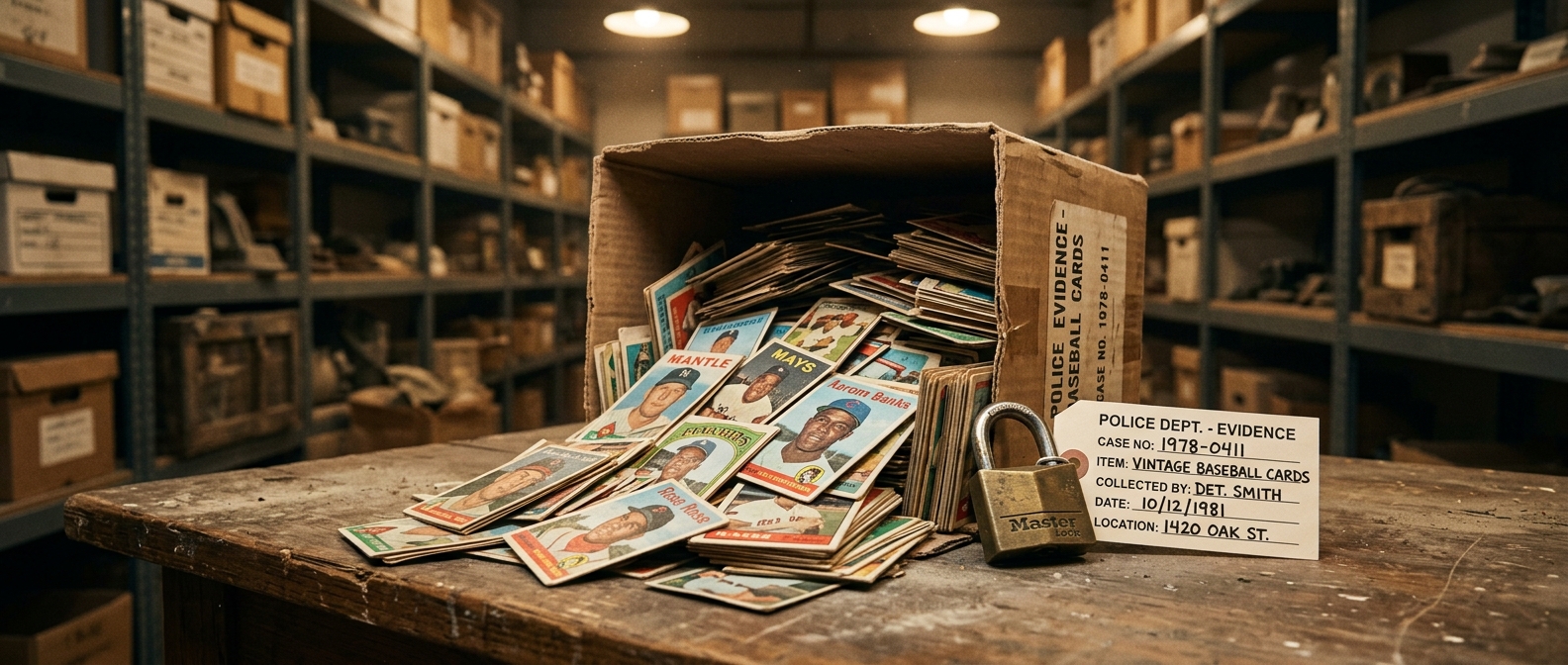
Somewhere in a storage warehouse right now, a box of baseball cards worth thousands of dollars is sitting untouched. No one has claimed it. No one may ever claim it. Eventually, it will be sold off to a stranger for a fraction of its value.
How Cards End Up Unclaimed in the First Place
It sounds almost unbelievable, but it happens more often than most people realize. Estates go unsettled. Storage units get abandoned. Evidence rooms fill up with property that was seized during investigations and never picked up again.
Baseball cards, along with coins, jewelry, and other small valuables, are exactly the kind of items that slip through the cracks. They're small, easy to overlook, and often stored in generic boxes that don't hint at what's inside.
For decades, collectors kept their cards in shoeboxes, binders, and closets. When those collectors pass away without clear instructions, or when a storage unit payment lapses, the cards don't just vanish. They get logged, boxed, and shelved somewhere waiting for someone to claim them.
Why the Old Ways of Finding Deals Don't Work Anymore
Collectors used to rely on garage sales, flea markets, and word of mouth to find hidden gems. That approach still works occasionally, but it's slow and unpredictable.
The problem is scale. There are thousands of unclaimed property auctions, impound sales, and liquidation events happening across the country every single month. No single person can drive to every flea market or storage unit auction to check for cards.
Meanwhile, the items that do get properly cataloged and listed publicly often move fast. Serious buyers who know where to look are already checking these listings weekly, sometimes daily.
Where Unclaimed Collections Actually Go
When property goes unclaimed long enough, it typically follows one of a few paths:
- State unclaimed property divisions - many states hold safe deposit box contents, including collectibles, after they've gone unclaimed for a set number of years.
- Police and sheriff auctions - items seized as evidence or recovered property that were never claimed by an owner often get auctioned to the public.
- Storage unit liquidations - when a renter stops paying, facilities are legally allowed to auction off the contents.
- Estate liquidation services - when heirs can't be located or don't want the property, professional liquidators step in.
Each of these paths eventually funnels into public or semi-public sales, but they're rarely advertised the way a normal retail sale would be.
Why Baseball Cards Specifically Are a Hot Category
Sports card values have swung wildly over the past few years, and vintage baseball cards in particular have seen renewed interest. A single card from a well-known rookie in good condition can be worth far more than most people assume, especially if it's been sitting untouched in a sealed box for decades. Condition matters enormously in this hobby. Cards that were stored properly, away from light and humidity, tend to grade higher than similar cards that were handled and displayed. That's part of why unclaimed collections are so interesting to collectors: cards that sat in a bank box or evidence locker for years are often better preserved than ones that got flipped through repeatedly.
What to Look For Before Assuming a Collection Has Value
Not every dusty box of cards is a goldmine. Before getting excited about a potential find, it helps to know a few basics:
- Check the era. Cards printed before the 1980s tend to hold more value due to lower production numbers.
- Look for condition issues. Bent corners, faded ink, and creases lower value significantly.
- Identify the players. Rookie cards of Hall of Famers carry the most weight.
- Research the manufacturer. Topps, Bowman, and a handful of other early producers are the most collected.
Even a partial understanding of these basics can help someone avoid overpaying at an auction, or recognize when a box is worth a closer look.
The Search Intent Pivot: Why Location Matters More Than People Think
Here's the part most people miss. Unclaimed property rules, auction schedules, and impound sale procedures vary enormously depending on where you live. A police department auction in one county might be open to the public with online bidding, while a neighboring county handles it through a private liquidator with almost no advertising at all. That means the generic advice above only gets someone so far. The real opportunity lies in knowing which specific auctions, unclaimed property databases, and impound sale listings are active near you right now. Some states publish searchable databases of unclaimed safe deposit box contents. Some counties post sheriff sale calendars online. Others require an in-person visit or a public records request just to find out what's available. If this topic has your attention, it's worth digging into the specific listings, auction houses, and unclaimed property resources available in your own area. The details change constantly, and what's listed today may be gone by next week.
A Word of Caution
Auctions and unclaimed property sales can be a legitimate way to find interesting collectibles, but they're not a guaranteed jackpot. Prices at well-advertised auctions can climb quickly once other collectors catch on. Always research before bidding, and treat any potential value as a bonus rather than a certainty.
Final Thoughts
Unclaimed baseball card collections are a genuinely interesting corner of the collectibles world. Whether or not any single box turns out to be valuable, understanding how these items end up available, and where to look for current listings, is useful knowledge for anyone curious about the hobby. The details are worth exploring further if this kind of discovery appeals to you.